Showing posts with label pc. Show all posts

Wednesday, June 17, 2026

Symphonia (PC)


Symphonia is a 2D platformer that has aspects of Metroidvania but doesn’t fully embrace that model. There are sections where you wouldn’t be able to reach the first time you encounter it, but they are usually for a collectible so it’s not as a whole new area unlocks, and you are supposed to backtrack to try and progress the game.


You play as a violinist, and the game’s story doesn’t have any voiced dialogue, and there is very limited written dialogue. It’s told mostly through the visuals. The violinist travels to the Heart of Symphonia, in the hopes of meeting the orchestra only to find all its members missing. The violinist then goes ahead to find the missing members return them. The game is in 2D, so you (usually) go from left to right. The game has gorgeous art as well, and the levels look stunning.


As a platformer at heart, the jumping mechanics, and the feel of it, are extremely important. Symphonia nails that. The normal jump is so so but use the right trigger and the Violinist will use the bow from the violin to strike the ground to jump higher. Well, basically it’s just a higher jump but the feeling as if you’re vaulting off a pole is addictive, and it makes platforming a whole lot more fun.


There are no enemies in this game, it’s pure platforming, which makes the level designs more important as there is nothing else to distract you. The game requires some precise platforming but has a lot of leeway so that it doesn’t feel unfair or stalls you for too long. Usually you are able to figure out what to do and give it a few tries to progress. Dying is not punishing as you respawn at the start of that section, and each section is small enough so that it is not that painful to redo.


Another major ability also utilizes the bow. Whenever you see a red cushion, this means that the Violinist can stick to it (like a vampire) and then vault off it. It can be finnicky as you can get confused between using the normal jump button and using the trigger button, but once you get used to it, it’s smooth and satisfying. The wall jump mechanic is like every other game and doesn’t feel quite as polished as the other gameplay elements.


Apart from jumping, the Violinist can also play his violin. Playing it anywhere doesn’t really do much, but at certain points in the game, he can play it for a collectible. There are other types of collectibles in the form of notes that are scattered through the levels, a lot of them are obvious, even though most of them require you to go out of your way to collect it.


There are four main areas, with the first one being a tutorial of sorts. As the difficulty gets higher progressing through the areas, there are different types of obstacles rangin from rotating boxes spikes and air currents. There are some sections where you will die multiple times because it is hugely reliant on getting the timing perfect. Earlier on, it’s annoying but manageable as you don’t feel it is completely impossible, so you keep trying until you get through it. In the later areas, the last one in particular, it crosses the line and becomes unfair. It’s frustrating when it is so reliant on perfect timing because then you get a de facto time limit. If you don’t do it in one go, you’ll die.


When you have a time limit, it feels like it wrestles control away from you. The platforming sections are less about pure skill where you can do it at your own time, and more about forcing you to play it the developer’s way and restricting you. Now you must rush through those sections and it’s not as fun if you don’t like that type of gameplay. The later gimmicks / abilities can be imprecise, especially the one where you latch onto something, but it is slippery and doesn’t suit using a controller.


Unfortunately, where the controls feel tight in the beginning, it loses that by the end. If you get to do it at your own time, it’s fine but combined with the forced timed sections and it’s a recipe for disaster. For a game billed as a “non-violent” platformer, there is an actual final boss that is anything if not violet, and it’s one of the worst levels, bringing out all the flaws of the control scheme. The story takes three to four hours to complete and a lot more if you want to collect everything (which are usually the hardest challenges). However, there is a sense of artificially extending the gametime since it stretches the final level’s five to ten minute section into over half an hour as you are forced to repeat huge sections of it due to dying.


Overall, Symphonia starts off as a strong platformer, and refreshingly fun thanks to its focus on pure platforming. It was perfectly balanced and you wanted more. However, by the last third of the game, it destroys all its goodwill with the introduction of some imprecise abilities combined with lazier level designs that are nowhere near as tight as it should be. You know what to do, even though it becomes ever more reliant on trial and error gameplay, but the control scheme fails you. It crosses the line with its final boss and its seemingly never ending final section that just feels unfair and cheap.

-----------------------------------------------

For other game reviews, have a look at this page and this page.

(As an Amazon Associate I earn from qualifying purchases)

Wednesday, May 20, 2026

To a T (PC)


To a T is a weird game, from the creator of the Katamari series. Whereas the Katamari series at least still has a concept that sounds interesting and understandable on why it can be addictive, T a T… doesn’t really. It has a unique premise that sounds like it could work, you play as a character who’s stuck in a T-pose (the default pose of character models in games and computer animation), and you see how this affects their life.


The game starts off by giving you the ability to customize the appearance of the character somewhat, plus name them whatever you like. The default name is Teen, and he’s a 13 year old boy living in Japan. The game is basically a slice of life story, as Teen goes to high school. Soon after the story starts, you’ll realize that Teen’s T-pose issue was always there since birth, although there is some cryptic dialogue from his mother that suggests that there may be more to it.


However, the game is slow paced, and is designed to be relaxing and chilled, with little tension, if any. All the gameplay are mundane things to do, such as getting Teen to school, using the right stick and the shoulder buttons to manipulate his arms so that he can eat or do other things. It’s amusing to see how he copes with doing normal things with his arms stuck in a T-pose, and it can be clever every so often, but since it’s mostly the same, it can get mundane and bland.


The controls are very easy, giving that you just use the analogue stick to move, a button to run, and the rest of the buttons as prompts which perform different things depending on the context. It’s a semi-open world, as Teen can explore his neighborhood. Everyone speaks gibberish, but you are expected to read the text dialogue to understand what they are saying. There are some weird things in Teen’s world that are just accepted, such as him permanently stuck in a T-pose, and the giraffe that makes food that just seems to be everywhere.


Teen has a dog, named Dog, who follows and guides Teen around. Dog acts as the objective marker, since it’ll lead you to where you need to go next. The game has fixed camera angles, and usually side on so that Teen runs from left to right. However, these angles will shift, which makes exploring confusing since you can’t see what’s coming up ahead, or lose your orientation due to the camera shifts. There are some minigames scattered around, but aside from the main story, there aren’t many side activities. You get to explore the town and collect currency, but there’s not much incentive to do so.


The story starts off focusing on Teen not appearing keen to go to school. There are no surprises why, given his condition, there are bullies. It will eventually move on and resolve that issue, given it’s a coming-of-age story. Unfortunately, that story is bland and down to earth, except for the random strange things that are accepted as normal in this world. It picks up in the final third of the game, where the story really takes a turn for the strange, yet somehow still makes sense. That’s not to say that the plot twist was not predictable, but it has a heartwarming finale.


There’s plenty of casual fourth wall breaking, even though the characters act clueless about it. The story is split up into episodes, complete with an “opening” and “closing” theme. There’s eight episodes, which are around half an hour to an hour each, depending on how much you want to get sidetracked. So, the game itself takes four to five hours to finish. After the story, you can reload your save and explore the town but nothing new unlocks.


Overall, To a T is an interesting and experimental game, although it lacks a gameplay hook. The story itself is good, given it’s more of a chilled and relaxing slice of life game as it slowly explores Teen’s life and background, giving a reasonable explanation for his permanent T-pose. The ending is interesting but given the slow pacing and mundane content, it is hard to say whether the payoff is worth it. A lot of the game feel boring given all you do is run around and read dialogue.

-----------------------------------------------

For other game reviews, have a look at this page and this page.

(As an Amazon Associate I earn from qualifying purchases)

Wednesday, April 22, 2026

Little Kitty, Big City (PC)


Little Kitty, Big City is an adventure game where you play as a cat. The premise is that you’re an indoor cat living in an apartment. The apartment is on a high level from the ground. Unfortunately, you get a shock and accidentally fall to the ground. Now, you need to find a way back up by exploring the city and talking to others for help.


The moveset is limited. You can jump and are able to adjust the height to a certain degree. Although you cannot really jump that high. You can also use your paws to knock things around or over, and you can cause quite a bit of mischief this time. As a cat, you’re free to explore the various small areas, which are usually cordoned off by water or high fences. As in any city, there are a lot of people walking around and you can nuzzle up to them, or be a bit evil and knock them over, before stealing whatever they are holding.


The explorable area gets bigger as you play. The early areas are small, but there are a lot of nooks and crannies that reveal yet another small explorable area. You don’t have as much freedom as you would hope, as there are still many places where you’d think you should be able to go but can’t. The only new ability you’ll gain is climbing, and even that is very limited to the stamina you have.


The way the game is structured is that it doesn’t hold your hand nor give much of a tutorial. You’re let loose to try things out. You’re supposed to do various mini sidequests where you help others along the way. These are usually fetch quests, finding one of the many collectibles that are scattered around the city. The game can therefore feel a bit aimless as a result. The goal is to explore enough to find the items that give you the stamina required to climb back up home.


There are a few quality-of-life features, such as fast travel points even though the map isn’t too big. There is a pretty artstyle where it’s simplistic, bright and colorful. It suits the tone of the game well. The movement unfortunately remains restricted and limited at times. Given you’re a cat, you’d think you will be a bit quicker, elegant, and nimbler. The humor is subtle, where the animals give flack to the cat.


At its core, the main appeal of the game is playing as a cat. None of the game mechanics, nor the story, are innovative. In fact, the gameplay design can be described as generic and only saved by the appeal of the cat. It’s a short game, taking around two to three hours to complete the ultimate objective of reaching the apartment. All the side content is available by the time you finish the game, and you’re free to finish off the content at your own pace afterwards.


Overall, Little Kitty, Big City is a relaxing game, which is a bit too short to be able to fully get yourself into. The content can be uninspiring but playing as a cat is fun and novel at first. The climbing and jumping mechanics can be awkward, oftentimes you will accidentally jump off something you didn’t want to. It’s a good game to play in between longer serious games, although the pricing is a tad bit high for what you get.

-----------------------------------------------

For other game reviews, have a look at this page and this page.

(As an Amazon Associate I earn from qualifying purchases)

Wednesday, February 25, 2026

Clair Obscur: Expedition 33 (PC)


Clair Obscur: Expedition 33 is a turn-based RPG. First off, the game has an excellent premise, and one of the best openings in a game where it completely sucks you in. It’s set in a dark fantasy setting, with heavy French inspirations. Years ago, the Paintress appeared and from then one, on an annual event, known as the “gommage”, people who are at a certain age or above would die. The twist? This age decreases by one year each year, so that next year, more people will die. By the time of the game, this has decreased to 34.


We’re introduced to Gustav, in which he is in his last year of life, being 33 this year. We see his motivation and despite being only in the first hour of the game, one of the saddest scenes that hit really hard. It’s surprising that the game was able to connect the players to the characters so well with so little time, but the amazing music also helps. Gustav joins Expedition 33, as they set out to try to find the Paintress, kill her, and end this curse.


The world outside is completely different to the built-up city, and the expedition does not start off well. Gustav and the other characters will struggle to survive as they continue onwards with their quest, which is brutal and filled with death. The game is inspired by JRPGs, so there are many familiar elements from that genre. There’s even a world map of sorts, where the characters are relatively much larger in proportion than the environment so that they travel greater distances. It also feels lazier as a result, since the world is not interconnected, but rather contains “dungeons”.


The combat system is turn-based at its core, but it does a lot of things to shake things up. Whereas Final Fantasy continued to morph into an action game and fully left turn-based combat behind, Clair Obscur fully embraces it, and the additions enhances, rather than detracts, from it. The typical turn-based mechanics are here, where each character has a turn, and the player can select from a menu what to do. The basic attack, use items, and use special abilities are here.


Where the unique elements of the combat system come into play are when you select those special abilities. There is the addition of what are basically quick time events. These will appear when you use special abilities. Furthermore, when an enemy attacks, you will always have the choice to press a button to parry or dodge. While you must get the timing right, it’s rewarding given that if you succeed, you get to negate all damage, and if you succeed at a parry, then you’re even able to counter. It’s worth it to try and get the timing right, but the game also plays on this as it will constantly change and fake the enemy’s attack telegraphy.


Each character also has a gun that can shoot an enemy’s weakness. To round it off, each character also plays differently and has their own unique gimmicks. Gustav has an ability that would do more damage if you managed to strike the enemy more. Another character can change stances which can complement another character’s gimmick of stacking charges. Being able to successfully combo these various abilities together to cause additional damage is satisfying.


In addition, each enemy has a break meter, which will feel. Once broken, they take extra damage and will be stunned until their next turn. Elemental weaknesses can come into play, but you can generally ignore these, as they are not critical in normal mode, it’ll just make the fights faster.


The problem with the combat system is that it highly rewards parrying, and to not unbalance it, it had to add difficulty in succeeding a parry. This is where majority of the difficulty comes from. Later in the game, enemy attacks become more complicated. The attack animations are longer with multiple fakeouts and odd timing (slow animations that suddenly become quick) to bait you and miss the correct timing. By giving odd timings, there is a disconnect between the strike hitting onscreen and when you’re supposed to press the button to parry. As a result, the timing to hit the button to parry often feels too early. This ends up forcing the player to do trial and error to memorize attack patterns, which becomes a tiring chore over the course of the game.


Later bosses and enemies are very cheap with their extreme delayed attacks, annoying uncurable status effects, shields, and no quick easy way to instantly restart a battle. It just sours the experience when you are forced to repeatedly play to memorize the attack patterns and get muscle memory, rather than relying on pure instinct and reactions. In general, the game takes a lot of bad stuff from the JRPG genre like force platforming, instant death attacks and the plot getting distracted by having to collect a certain number of special items.


On the flipside, with successful parries becoming so powerful, with enough practice, you can tackle bosses that are higher level than you are. It’s a high risk high rewards kind of thing because when a boss does succeed in hitting you, you’ll probably be one-shotted. There are some gimmicky battles for the optional bosses. Thankfully they are optional as they can be frustrating. Doable with a couple of retries, but grates on you and burns its goodwill.


Other JRPG conventions include obtaining various pieces of equipment for your characters. The main customizability come from pictos, an item that grants the characters stats, but also special equippable effects. This allows all sorts of builds for players who want to play in a way that suits them. The flexibility is fantastic, and given that when characters level up, you are given the freedom to assign the stats increases however you want, it gives you a lot of freedom.


The graphics are probably one of the weaker points. It tries to hide it with its art direction but can feel overly generic. There is a smearing / Vaseline effect, which is distracting. Bright areas can be too bright, and dark areas too dark. There is no minimap in dungeons, which makes them feel bigger and less linear than it really is. Usually there is a straight road to the end with some branching paths, but the lack of a minimap and overall genericness can confuse you from time to time.


After the excellent prologue, the story is a slow burn. It stays intriguing for most of it, but the cutscenes can be boring. It gets distracted by the midway point, losing a lot of its mysteriousness and urgency. Even after the big reveals, it feels a bit underwhelming due to the buildup. The final boss combines a lot of the annoyances you might have had from previous enemies into one. You are also forced to fight the first phase again if you die and restart. By that point, you just want to finish the game (which only takes around 25 hours if you don’t do too much of the optional content). There are two endings to choose from based on one decision at the end. Is it a satisfying ending? Hard to say since neither is perfect.


Overall, Clair Obscur is a fun and unique game, although it might have been praised maybe a bit too much. It’s not perfect, the parry and dodge mechanics add a lot of action into the turn-based gameplay, but at the same time, to not let it become too overpowered there are delayed animations, which end up only serving to frustrate and annoy. The story starts out strong but weakens over the course of the game. It’s a fantastic start though and still a fun game, just that there are still flaws which hinder it from being perfect. It is clearly heavily inspired by many different JRPGs but manages to combine them into a coherent polished product.

-----------------------------------------------

For other game reviews, have a look at this page and this page.

(As an Amazon Associate I earn from qualifying purchases)

Wednesday, October 2, 2024

Fault - Milestone Two - Side: Above (PC)


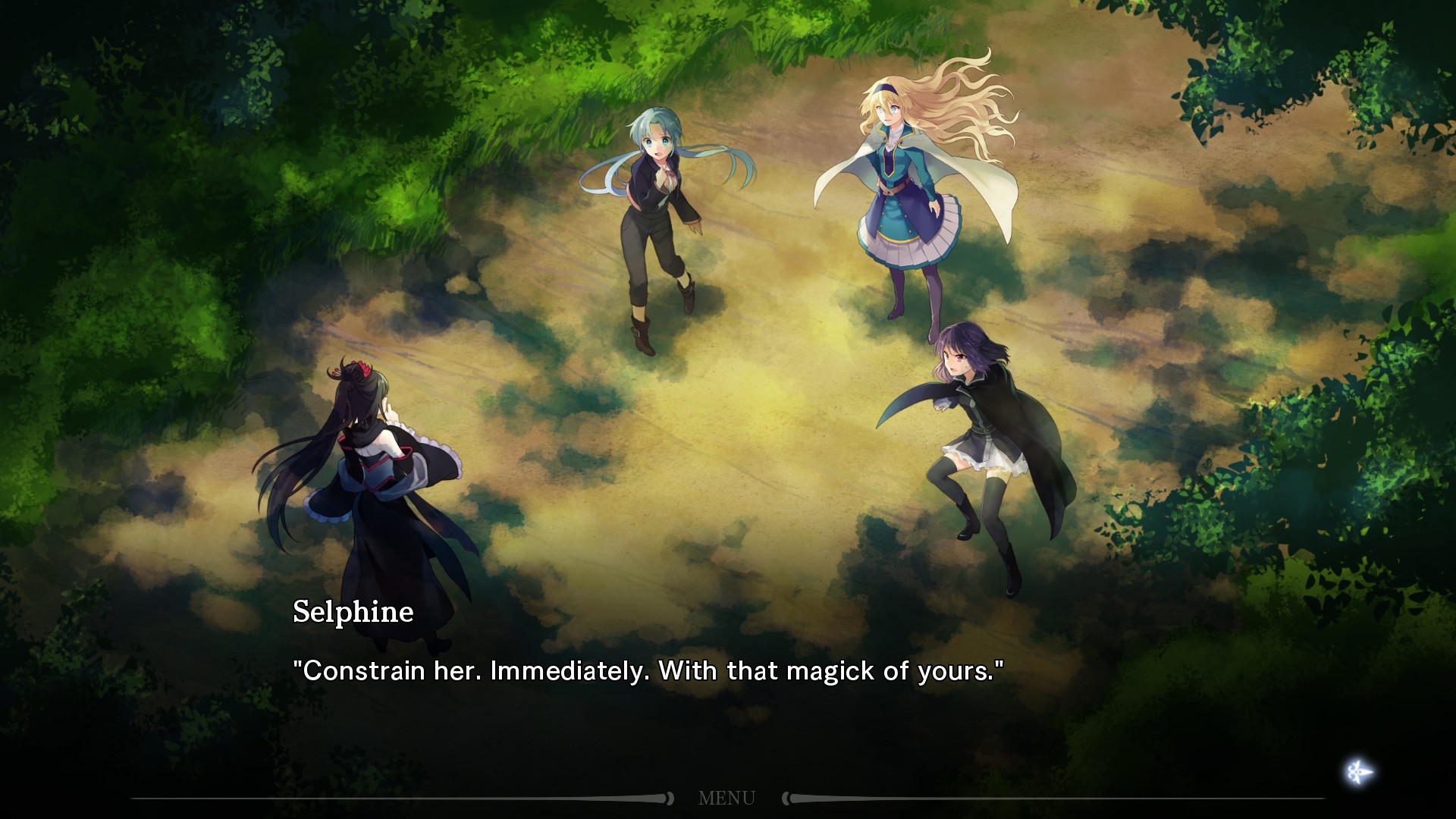
Fault - Milestone Two - Side: Above is the first in a two-part sequel, although even though many years later, the second part still has not yet been released. The story follows straight after the cliffhanger of the first game, where Selphine had a sudden personality change. It’s quickly explained what happened though and the explanation makes sense, having to do with her royal background. The game tries something different, and while we have seen it a few times before, so it doesn’t quite have the same shock factor, it feels out of place. Just like how the mana and science thing happened in the previous game, this attempt doesn’t quite gel with the setting of the game.


Nevertheless, the trio of Princess Selphine, her guardian Ritona, and their friend Rune, manage to escape and continue with their journey. The story then returns to the cheerful adventuring of the previous game, even though the stakes are supposed to be high, and they need to return to their country whose capital had been devastated. The game shifts the perspective from time to time, to other characters so we see what else is happening outside of the trio, but those scenes don’t contribute much to the current situation at all.


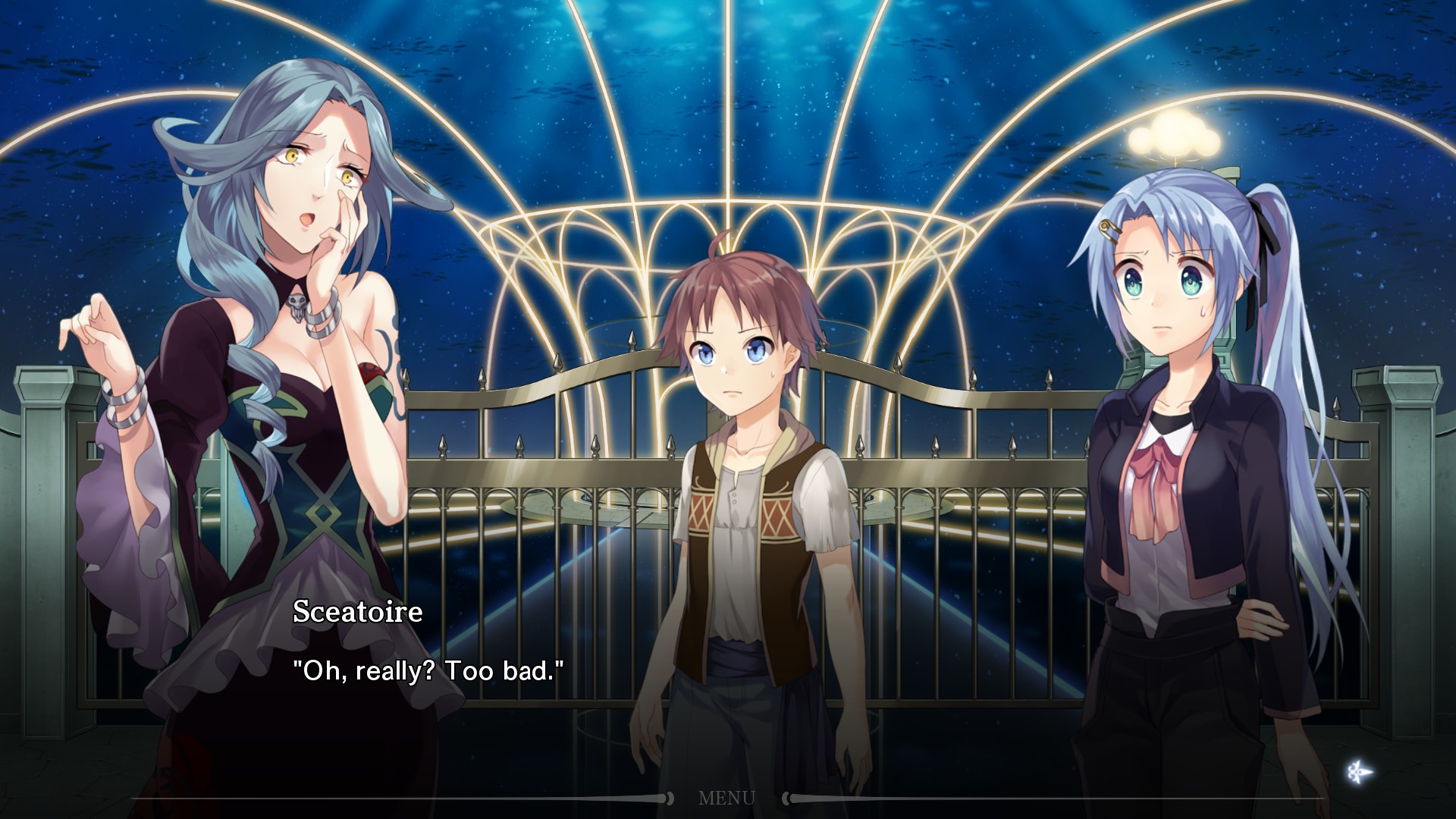
The trio arrives at another city, and pretty much the rest of the game stays there. Of course, they meet another new character who joins them to show them around. The city that they find themselves in are segregated into two, with a big schism between them. It kind of parallels the discrimination you would find in real life, but it doesn’t quite manage to tackle that theme in a meaningful way. The writing just feels too predictable and lacking any sort of surprise.


However, the quality of the game seems to have increased. Not that the first game was bad, but there is a bit more movement in certain schemes, and the writing, while isn’t amazing, is serviceable and feels more refined. The music remains noticeable, where it captures your attention during the scenes. There is still a lack of voice acting but this isn’t a huge dealbreaker.


The story takes off in a direction that you don’t expect, and in a way that’s good. In other ways, it just feels so random sometimes when the game ends up with a plot that’s self-contained and not really pushing the overarching plot forward. It is interesting to see the other side of Selphine, since she was introduced as an overly positive character. Cute and nice, yes sure, but practically useless. That changes completely in this visual novel but the way that she achieves this with, is questionable at best.


Similarly, Rune has some crazy strengths of her own. She’s still not great with communicating and interacting with the world, and there are funny moments where she’s clearly out of her comfort zone in terms of understanding what’s going on. Other than that, she can feel superfluous to the current events at times.


And finally, Ritona is the one that carries the group and pushes them forward. She is the one that plans what to do next, and she is the sharper one that does the commonsense thing of being wary of people, especially strangers that approaches you. While this doesn’t get them completely out of harm’s way, again, the events of the story can feel out of place. There is a sense that the writers don’t know what they are aiming towards. We are introduced to new things that supposedly creates new mysteries, but it doesn’t come close to start answering the previous questions.


A lot of focus is placed on seemingly mundane scenes of the trio enjoying the adventure of experiencing new things together. So much time is spent on exposition and supposedly setting up the later events, but the payoff never quite makes it seem worthwhile. Seemingly important characters show up but even with all the exposition, you don’t really appreciate the importance of them either as they do not do anything of significance in the current story.


However, there are some positives, such as when Selphine takes charge, and satisfyingly gets information out of the other characters. It felt like finally, some real action takes place, and this isn’t a contrive happy place after all. Sometimes you must get your hands dirty and get information out the brute force way. The game is quite a bit more violent, bloody and some dialogue is cruder than the first game. It’s not overboard by any means, and is much tamer than most other games, just that it contrasts against the first game which had none of these.


The visual novel’s length is very similar to the first one, under three hours if you have high reading speed. More like 4-5 hours if you read slower. There are no choices at all, and the game does admittedly have a lot more CG scenes, and the artwork is beautiful. After you finish the visual novel, there’s no further reason to continue as nothing new is unlocked.


Overall, if you liked Fault - Milestone One, then you will like Fault Milestone - Two. It is bigger and better, in pretty much all ways. However, if you didn’t like the first game, then this one won’t change your mind. The plot still feels overly contrived, and it is too easily distracted. With the overarching plot in the background and the high sense of urgency, the characters are dawdling too much. Then the visual novel has the gall to end on yet another unfinished business, so that the ending feels too abrupt.

-----------------------------------------------

For other game reviews, have a look at this page and this page.

(As an Amazon Associate I earn from qualifying purchases)
Blogger Widget