Showing posts with label ps5. Show all posts

Wednesday, August 19, 2026

God of War Ragnarok (PS5)


God of War Ragnarok is the sequel to the rebooted game from 2018. It’s a third person puzzle hack and slash. If you’ve played the 2018 game, then this game will be instantly familiar, and maybe overly so. The core gameplay loop remains the same. Perhaps the biggest surprise is that the story starts a few years after the previous, where Atreus is now a teenager, although he remains quite annoying, especially in the earlier parts of the game where he’s rash and lacking the life experience of Kratos.


Still steeped in Norse mythology, Kratos and Atreus have been living in hiding, trying to avoid the consequences of their actions from the previous game. Ragnarok is coming, and they were okay to ride it out. However, they were forced into action. Kratos is the one that’s unwilling at first. He’s lost much of his bluster and rage from the original games, and displaying a lot more wisdom and reasonableness. Still, that only holds him back so far, and the story focuses on the father and son relationship, and how Kratos can sometimes struggle with connect with Atreus, and yet he really cares for him.


Gameplay wise, this is still a hack and slash. Kratos has two main weapons, his Leviathan Axe, and his Blades of Chaos. The axe is more suited for one-to-one combat, while the blades have a move set that makes clearing swarms of enemies easier. Light and heavy attacks are mapped to the right shoulder buttons. Complementing that is the ability to block using his shield. He can aim and throw either weapon at enemies. And through a combination of different button holds, Kratos can execute different moves. Completing his move set are Runic attacks that can be swapped in and out, depending on your preferences.


It’s a robust enough combat system, and it is a more personal system given that the camera is permanently closer to Kratos (no different than the 2018 game). This can also make it feel claustrophobic, as you’ll often get enemies flanking Kratos, where he’s facing the wrong way and needs to evade an incoming attack. Atreus is almost always there, and he can help during the battles by firing arrows or stunning the enemies. He’s mostly controlled by AI, but you have limited control such as having Atreus fire the arrows on command.


There is a light RPG system where Kratos and even Atreus gain experience. It isn’t used for leveling up in the most traditional sense but rather is used to unlock more moves. Use these new moves enough and they get enhancements, thereby encouraging the player to mix up combat (which you would also want to do to avoid combat getting too repetitive and stale). Furthermore, loot is a big part of the gameplay loop. Beating enemies will cause them to drop loot, but you’ll get most of them from exploration. There are always constant branches in the main path where there’ll be a chest hiding (and often, even in plain sight on the main path). To the point where the characters even make jokes about Kratos constantly diverging to find a crate. The loot is then used to upgrade his weapons, armor and other accessories.


Unfortunately, the game’s structure is already very similar to the 2018 game, and this game doesn’t evolve it much more. It instantly feels samey, and playing through the first ten hours, it ends up being predictable. This is because each chapter is structured almost the same in that you’ll explore, solve some puzzles, fight some enemies, get to the end with a bigger cutscene, and then make your way back fighting some more enemies. It’s tiring and feels like a lot of it is filler. Which can be said for the puzzles, most of the puzzles are simple, but can border on annoying. These puzzles can be boiled down to finding something for Kratos to throw his axe at to hit a switch, thereby breaking through an obstacle to progress. It’s not deep and while it is a good change of pace from the combat, it’s not… fun or satisfying.


And that brings us to the game’s biggest problem, there’s too much filler. The game’s story, measured in hours to finish, isn’t that long. It only takes 25 to 30 hours. However, it’s the feeling of the journey that makes it feel long. The original game could get away with something like this, given that was more about the personal journey between father and son. This game, on the other hand, is on a larger scale, and you can say that the story could be cut in half and you wouldn’t lose any of the impact. There are just too many slow scenes that are pointless. There are long treks of repetitive nature. The characters constantly get sidetracked. All too often, they need to go to a location but need something else first. So, they go there to get it, but then need another thing, taking a big loop only to not need to in the first place, and we get back to the original intent.


The story also takes way too long to get interesting; it literally takes 15 hours before we get to the first bit of truly interesting plot. The game starts off okay, with Odin and Thor visiting Kratos and Atreus, while they are still on the run from Freya hunting them down. It evolves to the pair needing to deal with Ragnarok, the prophecy that foretells Asgard’s (and thus Odin’s) downfall. But for most of the game, you don’t see much of them doing much about it, despite the urgency. It’s only until the last third of the game where it feels overly brief and rushed to wrap up the story. It feels as if the developers ran out of time to properly do it justice, yet they still managed to find time right before the titular Ragnarok to send Kratos on yet another pointless detour.


Once Kratos heads into the final fight, it’s over in little more than an hour. While the climax isn’t completely underwhelming, it felt like it tried to close things off too quickly. It doesn’t help that the game has an amazing ability to not really create a likeable character. Almost all of them are annoying and extremely flawed to the point of not even being good to hate. The finale doesn’t answer much either, or a lot of the teases earlier on are not touched upon. That’s the biggest disappointment of the game; it sets things up but then they’re either cast away or revealed to be pointless. It truly does feel like a waste of your time.


After the story, there are still a lot of side activities to do. Each area you’ve been to has huge sections where they are optional and not visited as part of the story. There are hours of content, but whether you want to do more of the same stuff is up to you. Despite the fantastic graphics, and the high production values, yet it still somehow loses the wow factor. The combat and RPG elements become overwhelming. There are multiple ways to upgrade equipment, and then the characters themselves. It’s easy to lose track of what you want to upgrade next. Combat has a lot of options, and by midway through the game, you can finally use it to your full advantage, which is rotating weapons and utilizing the special attacks. It makes combat a lot more varied and enjoyable, but due to the sheer number of options, can be easy to lose track of.


There’s still one more major piece of content after completing the story and that’s the free DLC, Valhalla. It acts as an epilogue to Kratos’ story, for both the Greek and the Norse saga. It is a rogue-like, but despite that, it is still very story heavy. You are supposed to play through “runs”, and completing a full run will give progress the story. Dying is expected (unless you’re playing on the easiest difficulty) and you get stronger after each run. Yes, you do lose the temporary bonuses you get from the run, but you can then buy permanent bonuses to get stronger each time. Naturally, this means that the DLC is heavily combat focused, which isn’t too bad and can become addictive. It takes around five to seven hours to complete, depending on the difficulty you play it at, and it is a very substantial piece of content, especially considering it was free.


Overall, God of War Ragnarok doesn’t come close to the highs of the 2018 game. It had all the essentials to be an even better game, with the graphics, the core battle system, and the story coming off such a great game. Instead, it felt like it was half a step forward, like it was an extension of the game, rather than a proper sequel. The combat felt iterative, and the story was told poorly. Being semi-open world means that the story pacing suffers, and it already suffers from being overly slow for 80% of the game. There’s too much filler in the game, and so it feels like it constantly loses focus, and thus nowhere near as epic as what you would expect from the series.

-----------------------------------------------

For other game reviews, have a look at this page and this page.

(As an Amazon Associate I earn from qualifying purchases)

Wednesday, June 11, 2025

Biomutant (PS5)


Biomutant is an open world action game from a small developer, which makes the game all the more impressive when you first boot it up. The graphics are fantastic, making the world vibrant and colorful. Upon closer inspection, yes, there are imperfections and blurry bits, but it manages to keep up the illusion throughout most of the game. The game takes place in the future, where the world has been polluted to the point of no return. Remnants of the human world are still scattered about, and the Tree of Life is the only thing sustaining the world, but even that is slowly being poisoned, and it is up to the protagonist to solve that problem.


The game can be overwhelming at first. In the start, you set up your character, picking from a class which affects the stats, and a bunch of other stuff. Then over the course of the first few hours, the rest of the game’s systems are introduced. However, these mechanics can feel like they are not explained well, and that they do not all gel together properly. There’s just something off about the whole package, which drags the game down.


The core of the gameplay loop is exploration to get loot, so that you can get stronger and keep on going. Combat is simple, and a combination of melee and ranged attacks. The protagonist has guns which you shoot and then can also get up close to slash. There are special moves you can unlock as well as a few weapon types. Yet combat doesn’t feel deep at all, and hits lack impact, so you don’t feel like you’re properly doing damage. The camera in battles is also a bit awkward, especially when you’re trying to lock onto a specific enemy.


The loot being the biggest thing feeds into the crafting system, which is easily one of the most addictive parts of the game. You gain parts that you can use to strengthen existing weapons, or to craft completely new, stronger ones. That’s the main way to get stronger, quicker. There’s also a leveling system, where each level provides you with points to put into specific stats so you can get a character build that fits your playstyle. This gameplay loop should be the thing that keeps you going but unfortunately the bland combat doesn’t make it that satisfying.


The story is very weak. There is a permanent narrator who is providing the exposition. It is constantly talking, providing commentary when it may be unwanted, and you just wanted to explore in silence. The worst part is that all the characters in the game speak gibberish, so for dialogue, you get them speaking gibberish and then the narrator then translates. It’s a very slow and annoying way to converse. The game uses a quest system, so you go around finding new quests to complete. The main quest is simple int that you are tasked with defeating four strong enemies and is quick.


Unfortunately, the game falls into the trap of having repetitive missions in an open world. These start to become too repetitive from the middle of the game. You’re tasked with facing four major bosses, and the approach to each boss is always you doing fetch quests to find parts to get some sort of special vehicle or mount. Once you acquire the vehicle or mount, you have to use it against the bosses. This is the other big flaw of the game; these major bosses change up the gameplay to not use the battle system… rather you are forced to use the new vehicle or mount you had just acquired. Some boss battles also have a terrible design, which makes it frustrating.


While exploration is always fun, especially just searching around the place for items to pick up, for some reason, you end up having good enough equipment very soon. This is to the point that the new stuff that you find is often not better, and you end up having to scrap them. Similarly for the crafting system, it might take you a while to get enough good parts to craft a better weapon. Sidequests are plenty and you’ll be constantly unlocking them. They’re also fetch and hunt quests, but some have amazing rewards so it can be worthwhile to do.


The meat of the game is not the story, but all the other stuff. The story itself is a straightforward story with no twists, despite the semi-interesting post-apocalyptic world that has remnants of human civilization, but everything is not human. Fighting the four bosses, and conquering all the areas is repetitive and bland, and it’s short. The game takes around 10 to 15 hours to complete, if you do a healthy-ish dose of the side content. After which you can go back before the final boss and just keep on exploring, although it'll be the same stuff that you’ve already seen.


Overall, Biomutant, considering its small development team, is an impressive game. Unfortunately, it’s not an amazing or even a solid game. There are a lot of flaws, mainly concerning the mission structure and the poor story. Both are too repetitive and simple. The combat is off, feeling too floaty. However, there are pockets of potential where it can be addictive and fun, such as the exploration and crafting mechanics. If you have time, it’s worth a dabble, going in fully knowing and expecting these flaws.

-----------------------------------------------

For other game reviews, have a look at this page and this page.

(As an Amazon Associate I earn from qualifying purchases)

Wednesday, April 30, 2025

Final Fantasy XVI (PS5)


Final Fantasy XVI is the 16th mainline instalment of the series, and it is not like any other game before it. All the mainline entries, and even the spin-offs, are characteristically different, but this one even more so. Right off the bat, the aesthetics feel less like a JRPG and more like a WRPG. It embraces the medieval theme, with a large splash of fantasy. It may cause you to do a double take once or twice but you’ll soon warm up to it. The game has a serious story with a darker theme to it, and for that, the game is better for it.


The world is currently at war. The blight is taking over the land, where nothing can live or grow in it. As a result, all the countries are fighting each other to take fertile land for themselves to survive. Set in the medieval ages, the biggest difference is that the population can use magic, thanks to the giant magic crystals that is the center of each country. Each country also has their own Dominant. Dominants have strong magical powers and wield the power of the Eikon. Eikon are powerful magical beings, and are what players know as the familiar summons that are a staple of the series.


Dominants can transform into their Eikons, and the scale of the Eikons matches the scale of the story. Whereas summons usually are something players collect and get, maybe summon once or twice to check it out, and then forget. Here, they are portrayed as key powers that can turn the tide. The clashes between two Eikons are epic, and it really gives a sense of uniqueness and focus to the Eikons that we haven’t had before.


The story focuses on Clive, formerly of Rosaria. He sets out on a revenge mission, trying to track down the Eikon of Fire. He finds himself on a journey that will span the rest of the game. The story has a lot of politics in it, and it is definitely not afraid to show deaths and blood. In fact, it is probably the bloodiest Final Fantasy yet. The darker atmosphere oozes with charm. Even though Clive himself isn’t the most charismatic, he is likable and most importantly, easy to get behind of.


The other change from the usual Final Fantasy formula is the combat system. It is an action game through and through, with some inspiration from MMOs. It’s like a hack and slash, with Clive able to execute a basic combo of four strikes. He can fire off a basic magic attack, dodge and block. Rounding out his abilities are Eikon abilities which you can map to a combination of the right trigger button and one of the face buttons. These abilities are on a cooldown, hence the MMO influence.


You are supposed to hack your way through enemies. For tougher enemies, your aim is to whittle down their will meters so that they can reach stagger status. Once staggered, they will take more damage based on the damage multiplier. It’s a simple but effective combat system. The highlights are the boss battles, but sometimes their health bars can feel a bit damage spongey, and it all boils down to damage, dodge, stagger and damage some more, which can feel a bit tedious.


That said, this game has a great sense of scale. Even during normal boss battles, there are quick time events sprinkled through them. Normally they can feel superficial and unnecessary, but here, they add to the epic feel of the battles, even if it is a little more than just pressing a button. Similarly, the giant Eikon battles where you pit two against each other is a massive visual spectacle given the sheer scale and epic nature of the beings. This aspect cannot be underestimated.


The structure of the rest of the game can be meh. Equipment and levels feel like an afterthought. They are just there because they must be there for a JRPG. Given the limited number of towns and enemies, the game is linear. Most of the dungeons are linear corridors, yes, they look pretty, but when the game doesn’t even need to give you a map, it’s linear. The world map that you use to progress and travel through using a mouse-like map feels like an odd decision as it makes the world feel too segregated and siloed, pulling you out of the immersion that it is one big, connected landmass.


The game isn’t about exploration, it’s about action combat and the story. This can be both good and bad. Bad in terms of limited side content, good in terms of not having much filler and being a lot more focused. The side content it does have though, are uninspired, as they are short fetch quests, or hunt quests. However, sometimes, a sidequest may flesh out the backstory of supporting characters. It’s just a shame it is hard to tell which ones do this and are worth doing, and which ones are not. The bigger areas are devoid of interesting things to explore, and they feel empty and hollow as a result.


Like with a lot of JRPGs, the game starts off slowly, both in terms of story and gameplay. Yet by the time you fight and kill the first big villain, it rapidly increases its pacing, to the point of it feeling too fast. Gameplay-wise, once you unlock more ability slots, it feels faster and less crippled. On the story side, it feels a bit simple as you are going from place to place with the same objective. However, there doesn’t seem to be enough build up getting to the end of each of these sections, as it feels like it is a small dungeon, and then you’ve reached the end and fight the boss.


A few of the boss battles drag out, as does certain parts of the game. For every big story moment, it is separated by these filler sections that do little to advance the parts of the story that are interesting and that you cared about. A bunch of sidequests will also open up that can suck hours of your time. Towards the end of the game where you get to unlock the whole map, you start to appreciate how big some of the maps are. Too bad that they are mostly emptiness sprinkled with normal enemies and stronger ones from hunting quests. There is also too much of the same type of environment that can make it a bit boring.


However, perhaps most surprisingly is that even with all the filler, the game lacks a proper final dungeon. You go past the point of no return, expecting a dungeon that’ll take you an hour or two before you reach the final boss, only for you to immediately start fighting the final boss. That’s not to say that the final boss doesn’t take time, and it was epic. If you distilled the story, it’s nothing fancy and can eventually feel like a typical JRPG where the stakes have been pushed so far, that the earlier parts feel so out of reach and different. Yet, there were some climactic moments that were amazing, and dialogue that was epic. It did not let you down in terms of having a grand finale.


The game takes around 40 hours to complete, more if you finish the sidequests, a lot less if not. The game even on standard difficulty is quite easy, but upon finishing the game, there is a New Game Plus which amps up the difficulty, and compensates by upping the level cap. Nothing extra is unlocked after finishing the game. The story’s ending is a bittersweet moment, and it brings together all the characters that Clive had met on his journey, and it’s sad to say farewell to them all.


Overall, Final Fantasy XVI is one of the games in the series that is the further departure yet. From the art style being more western based, to the combat and game structure inspired by MMOs. That’s not a bad thing as the darker and more serious story is interesting (when it is trying to push filler onto you). Despite the reuse of enemy types from early in the game, combat is fun and fast, especially once you have unlocked all your abilities. It can feel spongey at times and some boss battles go on for far too long. Yet the game has a certain charm to it and is a polished game that you can’t help but enjoy it a lot.

-----------------------------------------------

For other game reviews, have a look at this page and this page.

(As an Amazon Associate I earn from qualifying purchases)

Wednesday, April 2, 2025

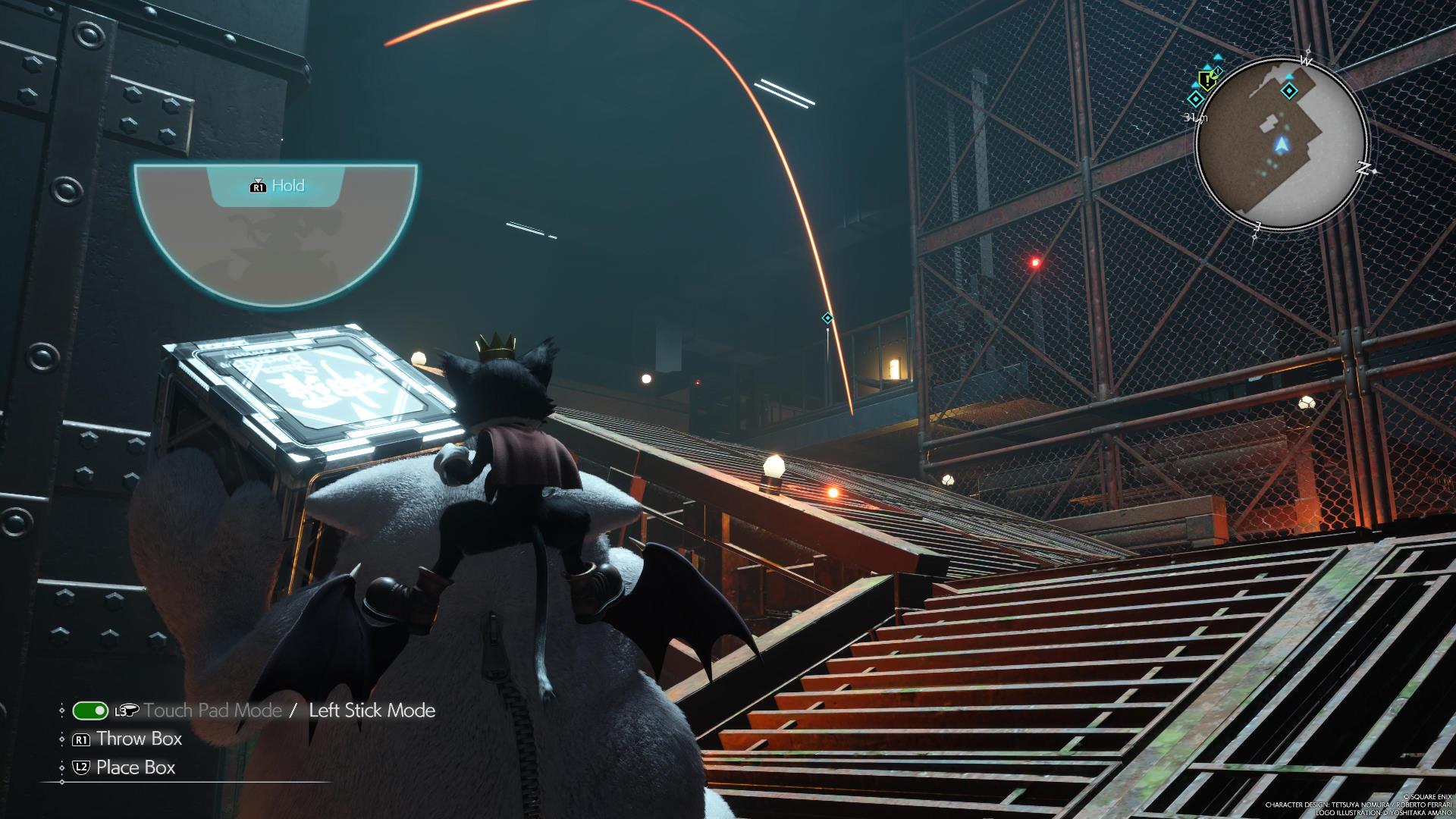
Final Fantasy VII Rebirth (PS5)


Final Fantasy VII Rebirth is the second part of the Final Fantasy VII Remake. Although given how Remake ended with its big reveal, anything goes for this sequel. It starts after the Intermission DLC of Remake, and so the party finds themselves outside Midgar and makes up their mind to chase Sephiroth. That is their only objective, and it leads them from area to area, going with the flow. Unfortunately, it’s not a strong story, and while faithful to the original, the pacing feels agonizingly slow and little feels like it meaningfully adds to the story.


Rebirth reaches the part of the original game where you get access to the world map, and its implementation here is recreating it into six zones. The game soon opens up with the first zone, and it is extremely impressive… at first glance. While the game has big environments, it carries over an annoying element from Remake. That is, there are often sections where you are forced to slow walk, shimmy through ledges and climbing. These are pointless activities, such as climbing where literally the only input is pointing the analogue stick to the direction you want to go in. These add nothing to the game except to painfully slow down the pacing, which is jarring and breaks the immersion (even if it is supposed to make it more “immersive”). It was bad in Remake and it is made worse here, and much more inexcusable given that the PS5’s SSD should now be fast enough to not require these types of loading masking tricks.


Disrespecting the player’s time is a constant theme of the game. In the linear story sections, there are stupid gimmicks such as pulling a slow object to solve the “puzzle”, if it can even be called that. There are huge amounts of gimmicks and minigames, which are inane things such as turning a valve five times just to trigger the next cutscene. The open world is filled with cookie cutter objectives that are the same in each zone. This game feels like a Ubisoft open world game, and that’s not a good thing. After the first or second zone, the activities are too repetitive as your progress is effectively lost in the next zone. Having a checklist of things to do that isn’t meaningful at all to the game is poor design. Even great graphics cannot save that.


Side activities in the open world are little more than just going to a point, playing some stupid short gimmicky minigame, and then moving on. It’s much slower than that as the game constantly wrestles control away from you after completing an objective for pointless debrief by an in-game character. Seriously, the game has the slowest animation, and coupled with these mandatory unskippable debriefs where you literally cannot even move, and it’s frustrating. Then the icing on the cake is to repeat the same things in the next area, and it becomes draining. The open world is also very empty, as the structures in it are little more than decoration, they don’t hide interesting things to find.


Bloat is the constant theme of Rebirth. Side quests are the usual fetch and hunting quests. Go from point A to talk to someone, then go to point B. It’s boring and unimaginative. It tries to use these to buff some the backstories of the characters, but it doesn’t present it in an interesting way. The bloat continues into the story where there are so many filler segments, slow walking during cutscenes and boring cutscenes. The story is slow and meanders through its events and indulges in itself too much. The constant forced minigames in its story segments are tedious and annoying. There is a weird overly campy / chirpy tone to the characters that doesn’t quite work and is at odds with what it supposedly its own serious story to tell. There is a constant fixation on Sephiroth. Yes, he is the big bad and an iconic villain. However, there is such a thing as overexposure when he makes an appearance so frequently throughout the game and shoved down your throat at every moment. For every cutscene mentioning Sephiroth and there will be a derailment of the story.


For combat, it builds upon the system of Remake. Thus, it is a hybrid of real time and turn based combat. You cannot fully play it as either, so it can be tricky to pick up its nuances. There is the standard attack, block and dodge (which doesn’t provide invincibility frames…). Standard attacks will mostly do chip damage, the main goal is to do enough damage and strike the enemy’s weakness to build up the pressure and stagger gauge. Once staggered, this is when you can do heavier damage and defeat the enemy. Attacking will increase your ATB gauge, which you expend to use special abilities on, which are usually the moves that will deal actual damage, strike weaknesses or have other positive effects.


Thus, the whole combat system revolves a lot around the ATB gauge, which means that it prioritizes aggressive plays. Even using items will require the ATB gauge, so you can get into a lot of trouble if you find your party in low health and need to attack to build up enough ATB to use a recovery item. The new addition in Rebirth is the Synergy moves. There are two ones, the first of which doesn’t use ATB, so that you can use it at any time. The second does use the ATB gauge and has very useful effects such as increasing the limit break level or splitting the ATB gauge into more segments.


Each character plays differently and you can control any of the numerous party members you have. This is both good and bad, but over the course of the story, the game will dictate the composition of your party. Sometimes it makes sense, other times it’s just for the game to continually waste your time. It truly feels that the game forces you to play it in a very narrow and specific way, which can suck a lot of fun out of it. The solo battles are the worst. Rebirth has a lot of overlaying systems on top though, there are separate leveling systems for the characters, weapons and party abilities, as well as a crafting system. All these systems together can be very overwhelming and confusing, especially when they were first introduced.


Like the whole game, the final dungeon drags on and on and on. It combines everything wrong with the game, such as splitting up the party and painstakingly following both at every moment even though you won’t care. It has constant slow walking, boring exposition dumps, solo sections, pointless “puzzles” where you are pulling and pushing objects and cutscenes that play 30% too slowly (you know something is wrong when you can use the in-game function of speeding cutscenes up to 1.5x speed and it doesn’t feel too unnatural).


The poor design continues onto the final boss, which just like the rest of the game is bloated and severely outstays its welcome. It is cheap and filled with many attacks that are pretty much instant kill attacks. It continues to wrestle the control away from the player as without any warning at all from before you enter the battle, that you are not allowed to pick your own party, it’s chosen by the game for you. There is even a breaking climbing section built into the battle, where you are climbing up the boss in an agonizingly slow fashion. Nothing better than to break up the pacing even more like that.


This might be all forgiven if at least the story was good enough, but it wasn’t even good. For all the teasing of defying fate etc from Remake, it then ends up being quite faithful to the original game for most of Rebirth, it goes for a lazy direction in its ending. It’s just disappointing. The developers stretched each story piece for too long so that it is disjointed, and you lose interest. It all feels pointless as a result. The developers have no clue what they want the game to be and to have, so they are stuck in this half-step where they cannot commit in one direction or the other. It’s a perfect description of the game as a whole, it tries to be everything and is mediocre at everything. They are too faithful to the original story, but then changes it enough to be a convoluted piece of crap, alienating all the players.


Anyway, after the story, which takes around 50 hours to complete if you beeline for only the story missions and do a few open world stuff, it opens up Chapter Select. You can go back to any chapter to finish off the stuff that you wanted to do, but seriously, why would you want to? Everything is busywork and feels like chores. Getting 100% is one of the most painfully boring things to do. The game’s pretty to look at but that’s it.


Overall, Final Fantasy VII Rebirth is a disappointment. It had so much potential, and it consistently teases what could have been. Instead, we get a generic overstuffed Ubisoft open world filled with pointless trash to do. The open worlds are tacked on just because it had to have an open world, and it isn’t integrated well with the story and the rest of the game. The story itself is stretched, and gameplay filled with rubbish minigames that are forced upon the player. The game constantly disrespects the player’s time, and everything takes longer than it should. The graphics are great, and the combat system can be overwhelming but at least it is solid. However, this is a massively bloated game, and it’s one where someone really needed to have reined in the developers and directions to streamline the game by at least 50%.

-----------------------------------------------

For other game reviews, have a look at this page and this page.

(As an Amazon Associate I earn from qualifying purchases)
Blogger Widget