Search This Blog
Showing posts with label ps1. Show all posts
Tuesday, December 24, 2019
Vagrant Story (PS1)
Vagrant Story is a JRPG for the PlayStation that was developed by Square, the same developers behind the Final Fantasy series. The game has an intriguing start to the story with an impressive yet mysterious cutscene set at a mansion. It introduces the antagonist to the player as well as showcasing some wicked fights. The game doesn't have any voice acting, thus the story is told via dialogue boxes. The story gets a bit muddled and lost as the game goes on but still absorbs you. Note that the graphics have not aged well because the game tries to pack in a lot of detail in the environments and uses realistic proportions for the character models. Since this is all done on PS1 hardware, it can be a pixilated mess at times but it is still impressive for what it manages to achieve. If you are playign this on a PlayStation 3 or PlayStation Vita, then turning on bilinear filtering does help smooth out the jagged edges. The art style on the other hand is timeless, and the older styled English used complements the atmosphere wonderfully. The music really sells the eerie feeling of being almost alone in the city with only monsters and enemies for company.
Unlike most JRPGs of the era, Vagrant Story features no random battles and no separate battle screens. The enemies roam the rooms and Ashley, the playable character, can enter into battle mode at the press of a button. The battle system is unique. Ashley must enter battle mode and how often he attacks depends on the speed of the weapon he's currently equipped with. You can target specific body parts, each with an estimation of the damage dealt and the chance of missing. The Risk Gauge is another unique feature of the battle system. Risk rises as you continue to attack and chain. The amount of Risk you currently have affects the amount of damage given and taken, as well as accuracy and evasion. For every attack Ashley does, the player can time a button press at the exact moment he hits the enemy to chain another attack afterwards. Chaining attacks also activates specific battle abilities such as increasing damage or transferring a portion of damage given to heal. However, performing long chains rapidly increases risk. The player has to balance out between dealing massive damage in one turn and knowing when to stop as not to leave themselves open for an enemy's attack that might kill Ashley due to the high risk. Similarly, you can time when enemies strike Ashley to activate defense abilities.
Finally, Break Arts uses HP and Magic uses MP. All of these elements combine into a very deep and complicated system and this isn't even getting into the equipment. The game does not have a tutorial on any of this, or even teach you about it at all. It expects the player to have read the manual beforehand to get a feel for it. Weapons and defensive equipment have affinities against enemy types, elements and attack type. This can easily feel overwhelming at first and back yourself into a corner where you are only doing 1 damage against enemies, so you definitely need to be careful sometimes. However, the combat system is really rewarding. Based on the affinity system, you constantly need to switch weapons against different types of enemies to target their weaknesses. To do this, you need to go through the menu every time, there's no shortcut. This is odd considering that there are shortcuts to all other parts of the menu.
Defeating enemies will net Ashley no experience points. Rather, Ashley gets stronger via gaining more skills by usage and better equipment. A big part of the game is disassembling equipment and combining them to create stronger ones. It is really easy to use up a lot of your time just experimenting with the crafting system. Unfortunately, you can only craft in specific areas, and as you have a small limit on the number of items you can carry on you at any time, you need to drag it out from storage. Sadly, navigating the storage means you have to save and load each time which feels like it takes forever, killing your enthusiasm for experimentation. Boss battles are one of the highlights of the game. Each one feels like the stakes are high although it is all too easy to find yourself facing one with weapons that barely do any damage. One of the great things is that no enemy in the game is a damage sponge and thus, boss battles don't tend to drag out.
Vagrant story is somewhat dark and can feel creepy and lonely at times. This is emphasized when Ashley travels alone for the whole game. You do not get a party at all. You can only save at specific save points and there isn't necessarily one before every boss, thus the stakes can be high. Traversing through the game is via individual rooms separated by a short loading screen. Some rooms may also contain "box puzzles" in which the player must move the boxes around to get to a high ledge. One of the more annoying aspects is when it forces time limits to traverse to the goal (often with the player having no idea where the goal actually is) otherwise you have to start from the first room again. In rooms where it requires platforming, it is horrible. Ashley's jumps are stunted and since this is not a platformer, if a segment requires precise timing and aiming, then be prepared to try more than a few times. At various points, you're expected to jump to ledges which are a tad bit high making it annoying to get there with the default jump height. The other occasional annoyance is enemy placements. Sometimes, you get put in a room where you have to climb, but then there will be multiple flying enemies that can also use ranged music. This can be infuriating when they keep staying out of your range but snipe you with magic. Doubly so when you have just passed an exhausting time limit trip.
The map system is fairly decent. There's a minimap showing the exits of the current room you're in. The bigger map you pull from the menu shows how all the rooms are connected. The game takes around 20 hours to finish with a walkthrough, a few hours more if you go in blind as it is easy to not know where to go and get lost. Once you've completed the game, a New Game Plus allows you to reply the story with the equipment you finished the game with. The best part is that the New Game Plus unlocks new areas and bosses, as well as an easier time combining to get the ultimate equipment. Overall, Vagrant Story is a wonderfully unique and gripping JRPG. There really has not been a game like it before, or since. The clumsy menu system to change equipment is the only part that hasn't aged quite well in terms of gameplay but everything else still holds up to this day. The music, the atmosphere, the combat system which is addictive once you understand it, makes it an amazing game and very rewarding.
------------------------------------------
For other game reviews, have a look at this page.
Monday, December 2, 2019
Grandia (PS1)
Grandia is a JRPG originally released for the Sega Saturn but was later ported to PlayStation. Unexpected for a JRPG released in the era, Grandia features 3D maps and therefore has a rotatable camera. In addition, it supports the analogue stick thus you can use the right stick to move the camera! That said, the characters are in sprite form and the game hasn't aged too gracefully at times due to this. However, it is still impressive in what they were able to render considering the hardware it was developed on. There are certainly some areas where there are lot of details and looks fantastic. The rotating camera can actually be a hindrance as it makes it really easy to lose your bearings and get lost. Considering that there is no minimap on screen, having to constantly press Select to pull up the map in towns can be irritating, doubly so in dungeons when you don't even have this option.
Another neat thing that was ahead of its time was the removal of random encounters. Enemies roam the battlefield and while you can rarely outrun them, at least you know that they are coming and can brace for a battle. Dungeons can be cramped though and since you cannot angle the camera up or down, objects can get in the way. It gets tiring more and more as you progress through the game because the enemy numbers skyrocket and it gets really annoying as you're constantly forced into battles. The problem is that the whole party trails behind you, making it near impossible to dodge enemies when they charge at high speed towards you. The battle system is turn-based but with a few twists. There is a bar at the bottom showing the order of turns and how fast a particular character's turn is coming up. A character an attack, defend, use items or use magic. Hitting an enemy can stall them on the bar thus delaying their attack and there are times where you can stun-lock enemies this way.
Characters have to physically run into range in order to strike the enemy and this can create some interesting scenarios where a character or enemy loses their turn because the distance was too far. There is a fairly deep experience system. Not only do characters gain experience to level up and gain stats, but their equipment has levels as well. A character can equip multiple types of weapons and through usage, gain experience and gain proficiency. As this levels up, the character gains skills to use in battle. This is similar to the magic system as well, the more you use it, the more it levels up. The story focuses on Justin, a kid who wants to be an adventurer in order to explore the New World. He is joined by childhood friend Sue and their relationship is well developed. Grandia does a great job at making you care for the characters, before Justin even sets off for his adventure proper, you already feel the sadness of saying goodbye to his family.
There is voice acting for some of the lines. They're a bit awkward but acceptable considering the early nature of voice acting back in the day. Annoyingly, you cannot speed through text. In voice acting scenes, you're at the mercy of the auto scroll, and in other screens, you have to wait until all the text appears first before advancing to the next piece of dialogue. On the whole, Grandia's gameplay is a bit too slow paced. In addition to not being able to speed up dialogue, you cannot speed past the results screen and have to wait for the experience points and money results to slowly tick up. Loading times between screens and into battle is a tad bit too long. Finally, you are forced to backtrack multiple times which is a pain and a huge grind because sometimes enemies respawn and you cannot easily avoid them. Spells, which you need to keep using to boost your skill levels, feels like it takes forever since you've seen them so many times.
There are many points in the game where you are not given much guidance on where to go. While this is how the old school JRPGs go, it is a bit too directionless and nevertheless doesn't allow Grandia to age that well. The other thing is that characters come and go which makes leveling up characters other than Justin somewhat pointless when they permanently leave the party halfway in. However, this is also the game's strongest part. When characters say goodbye, you feel sad right along with them. While the story doesn't quite pick up, it does escalate into a whole save the world type of scenario by the end of the game. It takes a lot of twists and turns, as well as plenty of pointless diversions before you finally get to the final dungeon. At least the story dungeons aren't too bad, the optional ones are another matter entirely as they are completely confusing without a map (but filled with plenty of great loot).
The game takes around 40 hours to finish, more so if you opt to do the extra dungeons and do a lot of exploring. The game is fairly easy in general and as long as you don't deliberately skip combat you'll be fine. The final boss was a tad bit annoying in how it summons and more and more mooks, crowding the turns. Overall, Grandia is a good game. It has an interesting battle system and a lot of elements that feels like it was ahead of its time. From the full 3D environments and freely rotatable camera to no random battles (but still forces you to fight too many enemies), it is impressive. Nevertheless, there are lulls in the story and filler dungeons but as a whole package, Grandia is a fun and worthwhile game.
---------------------------------------------------
For other game reviews, have a look at this page.
Thursday, October 24, 2019
Suikoden II (PS1)
Suikoden II is the second installment of the series and the sequel to the first Suikoden, released for the PlayStation. It is set years after the first game although you will meet familiar characters upon your journey across the land. The first game was clunky in its user interface and the combat system and so the first thing that hits you with Suikoden II is how the developers have improved upon these aspects. It has updated everything from the first game to make it smoother and much easier to grasp. The graphics gained an overhaul and is a lot more detailed and the sprites are exceptionally animated. The player character has the ability to dash from the get go without being required to waste a Rune slot.
The combat system remains effectively the same as you have a party of six characters, organized into two rows. Placement gives characters an advantage and disadvantage, some characters can only attack from the front, while other characters who are on the back row are less likely to be attacked. Each character can attack, defend, use magic if they are equipped with a Rune, and if applicable, use a Unite attack with another character. Perhaps the best thing is that the inventory system is handled a lot better. While each character still has their own equipment slots and accessories slots which is shared with consumable items, you have a party-wide inventory bag. It makes its so much better to organize items and equipment compared to the first game.
The rock papers scissors minigame return in the form of one-on-one duels, and plays exactly the same. While the large scaled battles have now changed into a SRPG affair. Unfortunately, these "World Battles" are horrible as the vast majority of them are scripted and means that your input is pointless. It only prolongs the game when you are waiting for the scripted event to happen, it's a massive waste of time and as much as the first game's version was luck based, this is even more so.
The game begins with you naming the main character. He and his childhood friend, Jowy, are part of the Highland Army when they are suddenly attacked. The pair manages to escape but find themselves betrayed by their country and ends up joining a mercenary group in the neighboring Jowston. Thus beings their journey of recruiting characters to their cause and defeating the villain. The villain this time around shows up much earlier and feels a lot more personal. The game doesn't shy away from sad scenes and shows the suffering of civilians as the collateral damage of some guy's ambitions. It's unfair, it's cruel, and the game throws it in your face with plenty of hard hitting emotional scenes. However, it takes around three hours before you finally get sucked into its world.
Once again, there are 108 characters able to be recruited, known as the Stars of Destiny. While not all of them can be in your party, the majority of them can. Unfortunately, some are permanently missable and thus you pretty much require a guide to recruit them all if you don't want to spend heaps of time aimlessly wandering around. Even when you know what to do, the requirements to get all characters are much more annoying than the first game. This includes backtracking through long dungeons (and suffering through the random encounters), doing specific tasks like earning over a certain amount of money through trading and knowing where to get items (which is very random) that the character asked for. It's much more like a chore rather than a bonus now.
Despite the improvements there are still a few quality of life issues. Recruiting characters is annoying without a guide. There are situations where you temporarily cannot recruit any characters, which is extremely annoying. There are also a few characters which relies on luck or some tedious grinding to get. A big negative is how long it takes before you can teleport. In the first game, you gain the ability to immediately return to your castle and also go to any town you want pretty early on. This time, it takes around half the game before you can teleport to places you've already been to, and then another fair chunk of time before you get to teleport back to your castle. It doesn't help that the story forces you to trek back and forth between cities using a slow walk on the world map.
What's also annoying is how heavily reliant the game is on magic users. Magic deals a significantly higher amount of damage compared to melee attacks. It's extremely annoying when bosses have large HP that forces you to heavily rely on magic. Another big boss later on forces you to use characters that you have not leveled, making it frustrating when you have one (or maybe two) strong party that you wanted to use and be able to easily deal with the boss but instead have to spread your characters thin. The worst part is that normal enemies are so easy but the bosses can hit hard with multiple attacks per turn.
There are a few difficult spikes throughout the game, mainly due to the bosses. It's inconsistent which bosses have a save point before them and which ones don't (forcing you to redo the whole dungeon if you end up dying). The final boss is one such spike since it's various attacks are damaging, can attack multiple times per turn and worst of all, extremely resistant on magic which is deadly if you have a magic orientated team (which is likely since magic is so much more convenient in dealing massive damage to bosses).
Overall, Suikoden II significantly improves upon the first game with better graphics, quality of life improvements and a pretty satisfying story. Unfortunately, there are still some niggling quality of life issues like the fact that you cannot fast travel for such a large portion of the game, inconsistent difficulty and the boring world map war battles which is little more than RNG and predetermined results making them pointless exercises wasting 20-40 minutes of your time in each battle. It's still a solid JRPG but definitely not a top-tier one.
---------------------------------------
For other game reviews, have a look at this page.
Tuesday, September 24, 2019
Suikoden (PS1)
Suikoden is a JRPG originally released in 1995 for the PlayStation and was later ported to Sega Saturn and PCs. Since it was an early PS1 title and a JRPG to boot, it retains the 2D sprite graphics from the SNES era. This does allow the presentation to age quite well. One glaring flaw is that the game needs a good tutorial because it does not explain anything. It's really frustrating since the game has such an outdated design too and you have no idea how to even use magic. The descriptions for things are hidden within the inventory menu so you need to already know the item's or spell's effect during battle because it won't tell you then. Suikoden has a simple turn based combat system. You can have up to six characters in your party, and they can all participate in battles. You can arrange the characters into two rows, therefore formation is important as some characters can attack from the back row while others cannot. You can also use an item, defend or cast magic. Two characters may also have the option to join together and complete a unite attack. For weak enemies, there is an option for auto-battle.
Magic is based upon whatever Rune you have attached to your character. While there is no MP bar, spells have a limited number of uses before you have to rest at an inn to reset it. One of the biggest draws to the game is that the player can recruit up to 108 characters to their cause. While not all are usable in the party, the majority of them can. It's not obvious though and some are hidden quite well. Each character has different stats that suit them to a particular role, however, the game is designed such that you can theoretically pick any party and still be able to beat the bosses. Even though there are so many characters, a lot of them do not have much characterization and feels like they are there just to make up the 108. If a character dies in battle, they're usually dead for the whole duration as there is no mention of resurrection during early game. Having your party wiped out means restarting from the last save.
Due to the game having so many playable characters, your party changes all the time. This is forced upon you due to story reasons and it gets annoying as inventory is tied to characters. Furthermore, you need to upgrade their equipment again and this makes it really expensive. You can only buy defensive equipment as each character keeps their original weapons, but they require sharpening at a blacksmith to increase in attack power. The worst part is when you have geared up all your party members ready to go and the game forces upon you an additional character so you need to kick one out. The last thing is that newly recruited characters are much lower than your party's levels at the time. Experience scales, so while you'll have characters whose levels are 10+ lower than what you have currently feels like a massive disincentive to use them, they jump in levels to catch up really quickly.
The game has not aged well in terms of menu design. The clunky inventory management system is the biggest negative. You need to move a piece of equipment to a character's inventory before you can use it. Finding items in treasure chests will automatically put it to the next character with free slots. If one character doesn't have any medicine in their inventory, they cannot use it while another character might have six of them at the same time. You'll eventually get used to it. It's also very easy to get lost and not know where to go next. As expected, the game features random encounters which are quite low in the beginning... but then you get to the point where it is a battle every two to three steps and it starts to get really annoying. The early bosses are easy until you get a tiny bit further into the game and bam, it throws you with a hard hitting boss that can attack the whole party at once. It does not help that when just before facing the boss, you got two new characters with horrendous armor, forcing you to grind enough money just to buy the decent equipment. You end up having to rely on the money exploit to get the best gear at any point and it's a shame that they made everything so expensive.
As you can only save at save points and inns, it hurts when the developers did not put a save point right before a tough boss. If you accidentally stumble upon them (and there is no indication at times that you're about to face a boss) without preparation after trekking through a tough dungeon and lose, it's frustrating to lose all that progress. The story hast he player take control of the son of General McDohl. Able to name the player character, he finds himself joining the Imperial Army along with his friends. Of course, this soon takes a turn for the worst and he ends up travelling the world in order to eventually save it. The story can be quite political at it calls into question the corruptness of the Empire. While the story is very slow in the beginning, and doesn't really pick up for most of the game, during the last part, you might realize that you are enjoying it. As you get closer to recruiting all the characters and seeing your army grown, it gives a sense of satisfaction. True, the story never goes above the simple plot of the hero defeating the corrupted emperor in order to save the world but it carries its charms. The game is short for a JRPG though, taking only 15-25 hours, depending on whether you are following a walkthrough or grind for money.
There are a few sections where the normal battle system doesn't come into play; rather, it changes into a rock, paper, scissors type of minigame. It's really annoying given that it is down to luck for the earlier battles. You eventually gain abilities that make it a lot easier. It doesn't help that some of them you are meant to lose, while others will dictate whether or not a character dies permanently. Overall, Suikoden is still a solid JRPG in this day and age. The menus and inventory system has definitely not aged well but everything else, from the story to the sheer amount of playable characters (which is still unique to this series because it's not a monster collection, each character has their own backstory, however brief). The sprites and 2D graphics shouldn't be a barrier and the random encounters aren't too bad, so Suikoden is well worth a play if you are interested to see what all the hype was about.
----------------------------------------------
For other game reviews, have a look at this page.
Thursday, August 1, 2019
Spyro: Year of the Dragon (PS1)
Spyro: Year of the Dragon is the third and last in the original trilogy of the Spyro series developed by Insomniac Games and for the PlayStation. The game has cute colorful graphics that manages to hold up better than a lot of other PS1 games. The only thing that doesn't hold up in this game is the fact that the camera can only be controlled by the L2/R2 buttons and not by the right analogue stick. You cannot invert the camera if you are used to the opposite directions. The game is a platformer where you control the small dragon Spyro who can charge, flame, jump and glide. He retains abilities from the second game from the get go including the ability to dive underwater, headbutt down and hover at the end of a jump for just that tiny bit extra distance.
The player starts off in the first hub world which has portals to various levels. Each level has a different design and theme. The aim of the game is to collect treasure gems scattered around the levels and retrieve dragon eggs. In total, there are four hub worlds, with each hub world having the same amount of levels: four normal levels, one level where you don't play as Spyro, one race level, one Sparx level and a boss fight. It takes around 5-10 hours to complete the game, depending on how much of everything you wanted to collect. The main collectible this time around are dragon eggs as the antagonist has stolen all of them from the noses of the dragons. By hiding them in a hidden part of the world that can only be traversed by Spyro thanks to his small size, it is up to him again to get them all back. Dragon eggs are either hidden in the level or you complete minigames to get it. The unified collectible means it's not as tedious as Spyro 2 (as that one had talismans and orbs).
There are 150 dragon eggs in total and you only need 100 in order to progress to the final boss and beat them. As long as you aren't deliberately speeding through levels, then this goal is very easy to achieve. Scattered in each level are enemies. Their designs and attacks are really similar compared to previous games, being defeated either by charge or fire. After three games of the same type of moves, it can be predictable. The great news is that you get gems again from defeating enemies, which is a lot more satisfying than just a spirit that powers up a gate. The flagship new addition in this third game is certain levels will allow you to use other characters. They have slightly different abilities such as the kangaroo being able to double jump or a penguin that can fly indefinitely and fire homing rockets, which changes things up quite a bit. It's too bad that they are regulated to only specific sections and levels, feeling underutilized at times.
The game perfects the blend of platforming in the original Spyro and the minigames of Spyro 2. The minigames are not as prevalent and the levels feel more opened. To be honest, the minigames are probably the worst parts of the game, since a lot of them aren't fun, are finicky or are super cheap/difficult, which just annoys the player. The ones that require you to utilize a vehicle are hit and miss. Some are easy to control, while others are a nightmare. Having one hit KO elements in some of the minigames also suck. The level designs are as great as ever. The main path to the end of the level is straightforward and easy. However, the portal leading back to the hub world is only around the halfway point of the level as there are plenty of hidden areas left. This makes it enjoyable to explore the level and try to find what it has to offer.
While you cannot select the difficulty of the game, it has an automatic scaling difficulty. If you die too much, things will become easier such as a longer charge time between an enemy prepping their attack and actually attacking. On the other hand, if you are good and have not died much, then it gets harder. This can be annoying especially during the race levels where it can feel near impossible to beat in the harder settings. On the whole, the platforming challenges and secrets are somewhat easy. The core difficulty does increase in the last world with stronger enemies with harder to avoid attacks, and tougher platforming.
When compared to the second game, the final boss isn't as memorable or as hard. However, the lower requirements are welcomed as you are not forced to retread levels before seeing the credits. Of course, there is still incentive to go back to each level now that you have unlocked all the characters, since they were previously closed off the first run through. The normal ending you get makes it clear that it is not over, and that there is a true ending. Overall, Spyro: Year of the Dragon is a fantastic and fun game. It takes what made the first two games great and balances it out such that you get great platforming and level design, as well as optional minigames that do not overwhelm everything else like the second did.
---------------------------------------------------
For other game reviews, have a look at this page.
Tuesday, July 16, 2019
Spyro 2: Gateway to Glimmer (PS1)
Spyro 2: Gateway to Glimmer, also known as Ripto's Rage outside of Europe, is the sequel to Spyro the Dragon and the second of the original PS1 trilogy. The graphics have stayed pretty much the same, although some of the objects may be a bit softer in comparison. In this game, Spyro retains all his previous abilities such as jumping, charging, gliding and breathing fire. Naturally, being a sequel, he gains new moves such as hovering and diving underwater. Yes, this means that Spyro does not die when he falls into water as he can swim in it. That being said, there are still other liquid hazards such as lava, boiling water and electrified water. These new abilities are gradually unlocked as the player progresses through the game.
The structure of the game is familiar with a hub world containing portals to the various levels. Each level has a different and unique theme now, meaning that it can sometimes feel very random and unconnected when you enter one for the first time. In each level, there are treasure gems for Spyro to collect and enemies to defeat. The gems now have a purpose since you spend these to gain extra moves and unlock pathways to progress through the level. If you take your time through each level getting most of the gems that you can see, you will never have an issue of running out. Unfortunately, the levels are also a bit more linear than the first game, you're able to easily get all the gems the first time around (that is, if it isn't locked behind an ability you haven't gotten yet).
Sparx the Dragonfly retains his purpose of showing how much health that Spyro has. Spyro can still only take four hits before he dies and you lose a life. Checkpoints in levels are represented by flying fairies and you can now save anytime, which is pretty awesome. In Spyro 2, it has changed its focus from exploration to minigames and optional quests within each level. For good or for bad, this adds variety to the game. Normally, beating a level will give you a Talisman for story progression but these optional quests will give Spyro orbs instead. These quests are usually simple challenges such as lighting up all lights within a time limit, solving a stone puzzle, a race course or a timed challenge. As there are so many different minigames, there will definitely be ones that you don't like as well as really frustrating ones that ends up making Spyro 2 a huge chore to complete 100% in.
You have the option to display a map showing the level's layout. It sounds great in theory but its still better to just explore yourself. The map can also be deceptive since the level can have multiple height levels. Apart from the platforming and minigames, the other gameplay focus is combat. Some enemies can only be beaten by flame, others by charging; you can usually guess how to tackle an enemy by their appearance. By defeating a certain number of enemies, this will unlock a power up gate in each level which gives Spyro a temporary ability such as superflame or supercharge. This is used to reach previously unreachable areas, defeat otherwise invincible enemies or assist you in completing a sidequest for an orb. The game in general is pretty good at letting you go at your own pace, choosing what to collect and what not to. Unfortunately, in the last world, this is not the case. The game forces you to collect at least 40 orbs (just shy of two-thirds), which can be quite tedious when you have to repeat previous levels.
Boss battles are a lot more involved. The bosses actually actively attack you now and don't just run away. Apart from the final boss, they're pretty easy. As expected of a platformer, the final boss is a multi-staged boss. The annoying thing is that if you die, you start again from the beginning of the first stage and this is such a drain. Yes, it is a typical design choice from that era but it doesn't mean it is a good one. It doesn't help that the camera angle is fixed towards the boss but you have to go around the arena getting items and thus the controls will initially throw you off. Repeating the same phase again and again just because you died in the last one is not fun and very repetitive.
The story is more fleshed out than the first game as there are cutscenes in very level. A bunch of new characters are introduced and they become mainstays in the series. Spyro wanted to take a holiday after defeating Gnasty Gnorc but is instead transported to Avalar, and ends up having to help free the lands from Ripto. Overall, Spyro 2: Gateway to Glimmer is still a really fun game. It doesn't radically improve upon the first game since that itself was pretty polished and fun, but it adds in a lot of additional abilities and minigames, which admittedly, might not be your cup of tea. Despite that, this is still a worthwhile game to play and has plenty of awesome platforming elements.
------------------------------------------------
For other game reviews, have a look at this page.
Tuesday, July 9, 2019
Spyro the Dragon (PS1)
Spyro the Dragon is a platformer developed by Insomniac Games and the first in a trilogy for the PlayStation. You control the titular Spyro who can charge, jump, glide and breathe fire. Charging and breathing fire will defeat enemies and these are the only abilities you have from the start to the finish. However, enemies will get harder as they start to wear armor and attack you. Spyro also has the ability to dodge roll using the shoulder buttons. The best thing about Spyro is the openness of the game. You are placed in a hub world, with level entrances that you can tackle in any order you wish. The game encourages exploration through placing treasure gems in all the levels. Levels feel very big and the colorful cartoony graphics still hold up to this day. You can feel overwhelmed each time you enter a level but it is satisfying when you have explored every nook and cranny and obtained everything that level has to offer.
In addition to the gems you free dragons that had been turned into crystal as well as recovering dragon eggs by chasing down fast enemies. The story is simple, the antagonist, Gnasty Gnorc, has turned all the dragons except for Spyro, into crystals. Furthermore, he has transformed various treasure gems into his minions. Spyro must travel the various worlds in order to defeat all his henchmen, free all the dragons, collect all the treasures and finally defeat Gnasty. Luckily, Spyro can take more than one hit. He is joined by Sprax, a dragonfly. Spyro can be hit up to four times, and Sparx changes color to depict how much health Spyro has left. He can recover health by eating butterflies.
Enemies respawn if you exit and return to each level, but instead of dropping treasure gems after Spyro defeats them, they drop a clear gem instead. Collect enough of these gems and Spyro gains an additional life. While the game has voice acting, a lot of the dialogue and the tone are very cheesy. You get a piece of dialogue for every dragon you release and their dialogue can be quite humorous at times. Although the frequency of the ones that just say "thank you for releasing me" is a bit lazy. While the game supports the analogue stick, the camera can only be controlled using the R2 and L2 buttons which is a shame. You can't even invert the camera controls either. Still, the camera isn't bad and the game controls very well.
Even though all the moves you had access to in the beginning of the game is all you'll ever have, the game never gets boring. This is because the level design is very good, it continually presents you with new things in each world from supercharges, to hidden areas, to different styles of enemies. Each level is refreshing and you always look forward to what the game has to offer next. The only slight annoyance in the game is how if you die in the final boss you have to restart all over again. While you get faster each time you redo it, it's frustrating when you get to the last stage and accidentally drop to your death and then having to repeat what you have already passed is always not ideal. Overall, Spyro the Dragon is an awesome platformer that still holds up to this very day. The colorful graphics, the clever level design and the multitude of things to collect is a lot of fun and addictive.
-----------------------------------------------
For other game reviews, have a look at this page.
Monday, June 17, 2019
Metal Gear Solid (PS1)
Metal Gear Solid is a game for the PlayStation and is a sequel to the MSX2 games Metal Gear and Metal Gear 2. It is an action-stealth adventure and is a defining game for the PS1. One of the most impressive things about the game and this is unique during that era, is how Metal Gear Solid combines gameplay with storytelling. It has a huge focus on the story which is told via in-game rendered cutscenes. The graphics were brilliant for the time (but of course, very dated now), with realistic proportions, complete with voice acting. Even in this first game, the cutscenes can go for a while, ranging from 5 minutes to 30 minutes at a time. The gameplay mainly involves stealth as you guide Snake through areas. These areas are patrolled by guards, who usually go on a set path, as well as surveillance cameras. Snake has a few abilities of his own. He can crawl and lean against walls to view what's ahead, punch enemies and use a variety of gadgets to forge a path ahead.a
Gadgets and other items found in the levels so they can be easy to miss if you just focus on getting to the next area. Snake will find guns, grenades and rations to heal his life. It is a smarter idea to avoid the enemies than to go into combat since the aiming is rudimentary. There is an auto-aim system for the weapons which is clunky to use. The game is mostly played in a top-down view, while you can go into first-person mode and also peer ahead around corners when you flatten Snake against a wall. Enemies usually go on a set path until they see you whereby they'll break their predictability and try to find you. The game can get difficult, especially for first-time players. You have to figure out what to do or where to go as well as be patient in order to not alert the guards. Being detected usually means death as the enemies will start converging on you and you lose access to the map showing the area's layout.
It's highly recommended to use the analogue sticks for the sections where you are running. This is because it's a lot easier considering the fixed camera angles. Shooting and moving stealthily is better with the d-pad. It can be a bit annoying when the game forces you to backtrack to find weapons required to beat certain bosses. Since the game doesn't tell you where to go next or if you missed something crucial you can feel lost a lot of the time. Snake ends up getting so many gadgets and weapons that you might forget when to use what and end up making life harder for yourself. The final sections of the game require you to backtrack yet again for story reasons and ultimately it ends up just having Snake run through empty corridors repeating the same thing again and again. It's padding pure and simple, with the game being better without it even if it would have been shorter.
The beginning of the game is where it is strongest with its stealth elements and clever use of gadgets. As it progresses, it starts to tone up the action aspect of the game, but the shooting controls are clunky and it just isn't as fun. Later on, the game heavily pads itself out by forcing you to backtrack multiple times, running up and down endless staircases and having contrived coincidences to have Snake take the long route. It's a tad bit too much and would have been preferred if the developer could have settled for a shorter but more refreshing game instead. The alter part of the game seems to have a high reliance on disabling your map and then putting in automatic gun cameras that you need to use a grenade to disable. It feels a lot more boring and cheap than patrolling guards and other obstacles.
The story has you controlling Solid Snake as he infiltrates a compound. His aim is to save two hostages from terrorists who are threatening to unleash nuclear weapons. It is an intriguing story and soon after, Snake finds out how much of a mess this situation is, with the stakes rapidly escalating. Characters are withholding information from each other and it leaves a deep mystery of just what exactly is happening here and what everyone's motives are. It doesn't get too complex and the ending is okay, it tries to thrown in some heavy revelations but it didn't have the proper build up to have quite the impact that the writer was hoping for. Boss battles really shine in this game. Each boss is a different take and requires a unique strategy. There are some really inventive and clever designs that haven't been replicated in another game since. Snake encounters bosses fairly frequently so it's a good thing that the checkpoints are generous.
For the most part, the controls are fine albeit clunky and awkward. What was really annoying though was the final section which is basically a shooting sequence. Sure you can go into first-person mode but it is still awkward as hell and difficult when Snake keeps flinching and throwing your aim off. It is frustrating and just a terrible way to end the game on. Overall, you can feel how impressive Metal Gear Solid must have been back when it was released. The cinematic sequences, the full voice acting, the mature story and some amazing gameplay designs. It hasn't aged quite that well though and the change from a stealth game in the beginning to a full blown action game can be jarring.
-----------------------------------------------------
For other game reviews, have a look at this page.
Saturday, May 25, 2019
Crash Bandicoot (PS1)
Crash Bandicoot is a platformer game developed by Naughty Dog for the PlayStation. Designed as the mascot for the system in order to compete with Nintendo's Mario and Sega's Sonic, Crash Bandicoot ended up spawning several sequels. Considering that this was an early PlayStation game, the graphics manages to hold up okay. At the very least, it isn't a mess of pixels and you can still easily tell what everything is supposed to be. As this was the first game in the series, the gameplay is quite limited. The player controls Crash, who can only jump and spin. Some enemies can be defeated by either of these abilities and some only by one of those moves. Unfortunately, you cannot tell if an enemy is immune to either jumping or spinning until you actually try it, leading to a few deaths.
The trial and error gameplay extends to the platforming. Crash runs through linear levels, smashing open crates to get the Wumpa Fruits inside. Collect 100 of these and you get an extra life. The game requires patience from the player, you cannot rush through levels as the timing of some obstacles do not allow for that. You're also expected to die a few times in order to know what is coming and prepare for it. This type of gameplay isn't so bad if not for the fact that you have limited lives. Checkpoints are scattered through the level but you will be repeating the same platforming challenges again and again. The levels start off really easy but before the first island is up, the difficulty spikes up and a few sections certainly feel cheap. Lose all your lives and then it is back to your last save. Checkpoint will be thinly spread across the later harder levels. This artificially extends the length of the gave and is not fun when you passed those same challenges multiple times to get one more chance at the one you missed.
The hog levels are the worst in terms of forcing you to memorize the patterns. Since you're going forward at a fast speed and the corridors are so narrow, it can be hard to tell first time around which side of the moving enemy you are supposed to go through. You pretty much just keep dying and advancing one more obstacle each time. Going back to your last save wouldn't be much of a pain if not for the archaic save system. You can only save once you have either completed a bonus level, defeated a boss level, or complete a level breaking all boxes without dying. This means you might not have saved for several levels, it is a really stupid save system and does not make any sense at all.
When everything does go well and you execute a series of perfect jumps, it is rewarding. There are a few control quirks where due to the 3D nature of the game and how the level was designed, you might not be able to judge distances correctly the first time and fall to your death. The game is filled with tiny platforms to jump onto, requiring certain precision to get past them. The d-pad serves you well most of the time but when you require the finicky jumps then it is a freaking nightmare to use. It is too inaccurate and because spinning carries your momentum, all too often you'll accidentally spin a box and then fall off the ledge. Seriously, what is up with this horrendous design choice?
There are 32 levels in total, including boss levels, spread across three islands. Since the island is the only setting, there isn't a whole heap of variety in the scenery except for jungles and temples. The gameplay remains the same throughout the whole game but the obstacles get more numerous and dangerous. You might ride a hog or run towards the screen away from a boulder from time to time. In each level are boxes and some other secrets, collect all the boxes without dying and you get a gem which can unlock hidden paths.
Crash usually run forward in levels with the camera following behind him. Certain sections may swap the perspective to 2.5D. Another cheap way the game causes you to die is the horrendous camera angles that block what is ahead. You pretty much have to die at least once to know next time that you needed to jump. Crash dies in one hit which can be infuriating at times. He can gain Aku Aku masks that allow him to take one hit, collection two and he can take two hits, if you collect a third than Crash gains invincibility for a limited time.
As expected of a platformer, the story elements are light. There is an opening cutscene to show how Crash gained the ability to run, spin and jump. He has to travel across the islands to get to N. Cortex in order to save Tawna, a female bandicoot. Overall, Crash Bandicoot has its good moments but the later levels have too many unfair obstacles and checkpoints being spread too far apart. Yes, you are supposed to "git gud" but it is not fun and extremely repetitive when you are pit against the same challenges YOU HAVE ALREADY PASSED again and again and again and again in order to try once again at another one.
----------------------------------------------------
For other game reviews, have a look at this page.
Thursday, May 16, 2019
Mickey's Wild Adventure (PS1)
Mickey's Wild Adventure is a platformer starring Mickey Mouse. It was originally released as Mickey Mania for the SNES and Sega Genesis but was later ported to PlayStation with enhanced graphics. The game is a 2D sidecroller platformer where the player controls Mickey. He has limited moves, being only able to jump and throw marbles. Jumping on most enemies will kill them, although in later levels, this only allows Mickey to stand on them with no damage. Otherwise, he can collect marbles scattered throughout the levels and throw them at enemies. Again, the earlier levels have enemies that die with one marble but later ones require three marbles while shooting projectiles of their own.
Mickey has limited health and continues. He starts the game able to take five hits per life (unless you play on Easy mode, in which case it is doubled), once that is depleted, he loses a life. Losing all his lives means that you need to use a Continue, and depending on your settings, using three to five Continues means that you have to restart the game from the first level again. The painful thing is that the game does not offer any sort of saving system at all. This means you need to beat the game in one go. Note if you play the game on easy mode, you cannot unlock the last level.
Not being able to save isn't so bad since the game is extremely short, taking only around an hour to complete all the levels (six levels plus a final boss). Unfortunately, as expected from games of that era, it is extremely difficult. The first level is easy but from the second level onwards, it can become brutal. The second level introduces enemies that explode when killed, and these pieces fly everywhere and will damage Mickey. The game has a tendency to have anything and everything being able to hurt Mickey and later levels has a large number of enemies crowded in a small spot making it hard to avoid.
The game can feel cheap with its reliance on hiding things out of view. Enemies can shoot you outside the range of what's currently shown on the screen (although the same can be said of Mickey, so it's a double edged sword). The controls could be tighter since Mickey runs fairly slow and his jump is very "floaty". This may lead to more than a few instant deaths by falling into a bottomless pit. One of the worst parts has to be when Mickey is forced to jump from swinging chain to swinging chain. Miss one (and you will miss), and it is instant death, have fun repeating the level again.
The player has to figure out simple puzzles in some levels. They are simple... once you realize what you have to do. A few times, you may scratch your head as you needed to have pushed this random item that you thought was a part of the scenery all the way to the end to be able to jump onto a platform. A noteworthy aspect of the game is the nice graphics. It is colorful and looks fantastic, aging very well to this day. The levels are based on various Mickey Mouse shorts, and the beginning level feels so iconic with its black and white color palette based on Steamboat Willie. That being said, it can be hard to judge what is part of the background and what is a platform that Mickey can stand on is. There are some areas where there are nice 3D effects such as when Mickey is running down a castle or during the chase sequences.
Surprisingly, there aren't too many boss battles. The various stages of the final boss are extremely difficult. You need to be patient by slowly and methodically going through the motions. It dragged on and on since you are forced to repeat the same thing multiple times. There's not much story to the game since it is just Mickey traveling to his various cartoons from the past, saving the various Mickeys in them. Overall, the greatest things going for Mickey's Wild Adventure are the graphics and nostalgia. The controls and design aren't exactly the best, with the game becoming very difficult early on. The final levels just feels impossible to beat and the fact that you cannot save, being forced to beat the game in one go, is just poor design.
--------------------------------------------------
For other game reviews, have a look at this page.
Thursday, May 9, 2019
Theme Hospital (PS1)
Theme Hospital is a simulation game originally for the PC but later ported to the original PlayStation. As the title suggests, players are given control of operating a private hospital to cure patients of fictitious (and often humorous) ailments. Unfortunately, the game doesn't really have a Free Mode to do whatever you want, instead there are levels with set challenges. These challenges mostly just involve getting a certain amount of money, curing specific patients and getting your reputation up. Once you reach the objectives you are given a promotion to move onto the next hospital (aka level). You can decline, in which case you can continue on.
As the game was originally designed for PC, the user interface is a bit clunky for use with controllers. The way the selection boxes are designed, right down to the mouse cursor, are retained in this PlayStation port. Navigating is simplified for controllers as using the d-pad will move the cursor to the next available option. Nonetheless, the game has a heavy reliance on using icons due to the limited screen estate, meaning it'll take a while before you understand what they mean. Starting upon the first level, you can toggle on the tutorial which is fairly comprehensive as far as these things go. It'll teach you the motions of building certain rooms, providing a flow of the gameplay and hiring staff. Placing rooms are easy, you are able to expand the sizes and edit them later on if you wish. Again, using the controller to do these things makes it finicky and as you cannot rotate the camera, it is harder to judge distances.
There are a lot of nuances to the game that the tutorial doesn't tell you. You end up having to find out yourself, read the manual or search online. These include what certain items do, the fact that you can purchase additional items when building rooms and how to keep your staff happy. There are a bunch of menus that while not essential, are pretty useful. This is because you can take out loans from the bank, buy extra plots of land and check your current stats. The game is in 2D in an angled top down view. It works well but it would have been even better if you were allowed to rotate the camera to see the place at another angle. Naturally, this is the PS1 so the graphics haven't aged very well and is blurry on contemporary TVs.
Each level starts you off with an empty hospital and it is up to you to decide what to put. There are the usual staples to put in such as a General Diagnosis room but later on, you will need to research extra facilities. This is because new ailments come and if you don't have the proper facilities to diagnose and cure it, then the patients will leave and you lose reputation compared to your competitors. Soon after, you'll run out of space but you're able to buy extra plots of land to expand. Later levels pushes up the difficulty through larger hospitals, more ailments and less experienced staff, meaning you will have to train them up from scratch.
The fact that you have to start from scratch in each level means that it can get repetitive later on and you just go through the motions of efficiently setting everything up. The game throws in various elements to make it unpredictable including emergencies where swarms of patients come in with a certain illness. This will test whether your hospital's facilities can cope with the influx in numbers. Natural disasters may happen causing all your machines to break down and potentially explode.
You're able to set the game speed, the lowest setting allowing you plenty of time to change the layout while the higher setting rakes in the money (assuming your current layout is sufficient). You can also set the game's difficulty from Easy to Hard. Overall, Theme Hospital, while fun, never quite gets too addictive. This is because in the early levels, you finish the objectives before too long. While in the later levels, you go through the same set of motions to set it up and then wait until you have enough cash to build new facilities. Sure, while micromanaging is required for the higher difficulties, it doesn't quite reach the heights of say Theme Park.
-------------------------------------------
For other game reviews, have a look at this page.
Thursday, April 25, 2019
Street Skater (PS1)
Street Skater, also known as Street Sk8ter in the US, is one of the first (if not the first) skating game for the original PlayStation. Developed by Atelier Double and published by EA, it is a fun arcade game. The controls are extremely easy, which is good, because there is no tutorial. Your character automatically accelerates. You use the Square button to slow down, Circle to crouch and gain speed, and X to do an ollie. Combining X with one of the directional buttons while you're about to jump off a ramp will allow you to perform tricks. The game boasts hundreds of tricks but you only have the four different button inputs to do it... what tricks you do will depend upon the speed and the level of your character.
Getting the timing correct for the ramps takes some getting used to. You'll no doubt crash and burn a lot of times in the beginning. The key to jumping off the smaller ramps is that you do not press the combination for tricks at the end, but rather in the middle of the ramp. Aiming your jumps will allow you to grind rails. The jumping mechanic will take some getting used to, and the collision detection is typical of the games in the age, being weird and instantly stopping you. Successfully completing tricks and grinding rails will give you points. The aim is to get a high score by the end of each stage. Unfortunately, crashing will deduct points, which is not great when you are just beginning and you lose the points you worked so hard to get.
There are two modes: Street Tour and Free Skate. Street Tour is your typical main game mode, which comprises of three courses along with two bonus levels. You need to beat the high score at each course in order to progress through the next and this can be tough when you begin. The bonus levels will give you additional time in the next course which is a boon and means the later courses are easier to get the scores required to clear it. The Free Skate mode allows you to select any of the courses and skate to your whim. You can remove the time limit in this mode allowing you to practice and explore the courses to your heart's content. There is a VS mode allowing you to play with a friend, but of course, you need two controllers for this.
There are four characters to choose from in the beginning and it is highly recommended to pick the one with the slowest speed. This may sound counter intuitive but it makes it much easier to navigate the courses when you are starting to get your bearings on how to handle the game. Each time you clear a course in Street Tour mode with a character, it levels them up and you can distribute points to their various stats (handling, acceleration, jump power and max speed). This is a great element and encourages you to check out other characters. Higher levels mean better tricks and more points for them.
Unfortunately, while the game is a lot of fun specially when you complete a successful run chaining together multiple tricks, it lacks in content. There are only three courses along with four bonus arenas (which is just one massive skate ramp). Each course will take 1-5 minutes, meaning that theoretically you can beat the game within 15 minutes. Go in it for the first time and you'll have to take multiple attempts on each course, extending it to 30 minutes to an hour. The replayability comes from high scores as well as completing the Street Tour mode multiple times to unlock more stuff. You will get to eventually unlock alternate pathways in the courses, four additional characters, new skateboard designs and mirror mode.
The soundtrack is one of the best aspect of the game, it suits the action perfectly. The graphics are nothing to be wowed at though and while it hasn't aged well, you'll soon get used to it but most importantly, the gameplay remains fun to this day. The bright colorful level designs helps keep the game feel upbeat and positive. Overall, Street Skater is a typical arcade skating game that's reminiscent of the design choices from that era of games. It has aged fairly well but the limited amount of content is what holds it back.
------------------------------------------------
For other game reviews, have a look at this page.
Sunday, May 5, 2013
MediEvil
A game with a fairly unique atmosphere. Mostly, it's fairly quirky with a dash of humor but surprisingly, it can get pretty freaky or scary at times. On a whole, MediEvil is an action hack n slash with a touch of platforming and simple puzzle solving. There are a heap of weapons that the character, Sir Daniel Fortesque, end up obtaining, which lends a great variety in the gameplay (even though you'll end up using a few of those for most of the game). In each level, there is a focus on exploration. This is the fun part as you scour through the levels for any hidden areas and items, the addition of a collectible chalice which can be obtained by defeating most of the monsters in each level, extends the game time (in a good way). If you're playing blind, then you'll be replaying levels again and again as you attempt to get all these items, which, in a way, can be annoying since the game doesn't provide any hints or tips about where to find these items (especially if the one you're missing is stopping you from progressing through the game). It's a Playstation One game, so the graphics aren't spectacular but it gets by and it's good for it's time. Some of the details in the levels can be impressive but mostly, it can get depressing when you see the darkness at the edge of the screens.
Sure, those darkness may be fine due to the game's dark nature but you can't escape the fact that the boundaries of each levels are so obvious. The pre-rendered cutscenes are awesome though. Each character's dialogue is quite funny (although voice acting isn't exactly the best) as they usually pay out Fortesque. That's about all the positives... There are some flaws in the design of the game that prevents it from being a stellar game and will occasionally annoy the hell out of you. First off, the camera is awkward. You rotate the camera using buttons, NOT the analogue stick. It wouldn't be so much of a problem if the camera itself was good but sometimes, especially during platforming elements where you have to jump from platform to platform, it will be your enemy. It'll be hard to gauge the distance and angle and you'll miss and fall toy our death. Movement can also be clunky no matter whether you're using the D-pad or analogue stick. Fighting isn't as smooth as you'd want, Fortesque isn't exactly the most graceful when using his weapons. A strafe function would be awesome (but sadly, back in the days where 3D was just blossoming, this wasn't possible) as aiming can be awkward and it's hard to not get hit by the enemies.
The problems you get when you add all these control issues together will definitely ruin moments of the game where you die... and it's not your fault. What makes it worse is that once you die in a level, you're sent to your last save... meaning you'll have to redo the level the whole way, sucks even more if you died at the boss at the end of the level, it feels so tedious. Some of the level design seemed like they deliberately want you to die and get you frustrated as you try it again... and again... and again (the Ghost Ship level comes into mind). To be honest, most of the game is easy but it's just one or two levels that gets on your nerves. The music used is great and I love it, it suits the game so well and builds up the atmosphere. Puzzles are usually simple but you'll be backtracking around the level to solve some of them as you try to figure out how to proceed. The story is also surprisingly quite engrossing. While simple, the characters are so charming that you want to keep going through the game to see what else comes up. The final bosses were disappointing. They were similar to each other and they weren't that interesting. The ending that you get though was great, and made the effort to get there worth it. We get to see Fortesque finally becoming the hero that he was supposed to be. It's a solid game but one that'll get annoying at times due to the awkward controls.
-----------------------------
Other game reviews can be found on this page.
Monday, November 5, 2012
Crash Bandicoot 2: Cortex Strikes Back
One of the best games on the Playstation, and a great platform game in it's own right. The classic formula still stands the test of time and I had a blast playing through it. I only had experience with Crash Bandicoot 3: Warped and while that game has a ton of new features, I found Crash 2 to be more imaginative and creative. The obstacles were more clever, and the paths more interesting. It could be just that I've played Crash 3 to death... Anyway, one thing's for sure, the boss battles are terribly easy, it'll require only a few attempts if anything. The N Gin boss fight felt a bit primitive considering how clunky it felt and looked when Crash shot those wumpa fruits. The many animations of Crash were a nice touch, from how he looks behind him in fear when a huge bear's chasing him, the winks and smile when he's about to jump onto a smaller bear (to ride on) or his sighing when you leave him alone like he's sick of you making him die so many times. I've seen reviews where they said the settings were limited (I think around nine distinct environments) but I didn't think that was too much of a problem, still a lot of variety here. The enemies were interesting, and I loved how some enemies can only be defeated using a specific attack (spin, slide or jump).
The music was great but yeah, that was a little repetitive, but it suited the game so well that I can hardly fault it. The controls were smooth but some of the platforming aspects were annoying, in some areas where you had the view of viewing behind Crash, and were jumping on small platforms, it's easy (especially in the first few times) to misjudge the distance and fall to your death. The graphics were great, considering it's age and the hardware limitations of the time, very pleasing to the eye and hardly any rough edges. The collecting aspect was done well, with a few optional collectibles that is actually pretty challenging. There's some pretty unexpected and interesting ways to get these collectibles. Then there's the secret levels, areas and boxes, whoa, they're hidden really well, which makes it that much more fun to rat them out. The story is weak, it's here only as an excuse to string the levels together. The words can be hard to hear too, making the characters hard to understand (most of the story is only comprised of short speeches from holographic characters...). This is a great game providing a lot of challenge, yet it's easy enough to have a lot of fun with.
-----------------------------
Other game reviews can be found on this page.
Sunday, October 14, 2012
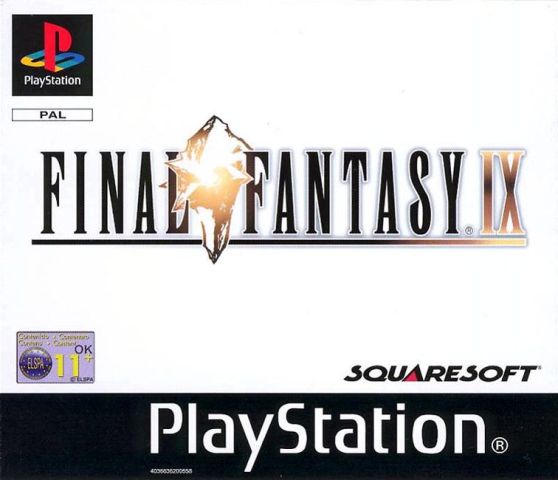
Final Fantasy IX
The last Final Fantasy from the Playstation era, with it's prerendered backgrounds and Active Time Battle system in all it's glory. However, I found this to be one (if not the one) of the most annoying and frustrating Final Fantasy I have ever played, I will go back to that later. Anyway, I personally preferred VIII, but IX excels in a lot of things, from the setting, to backgrounds to the music, there's no denying how impressive they all were. The story was average, and I liked it better than VII, I didn't feel it picked up pace and often times (mostly during the beginning), it would drag and I would not be interested at all. As you progressed, there were some very good scenes, I really liked the one where the party cheers Zidane on and show him that they are a team. The love between Zidane and Dagger isn't as well done, it feels... contrived at times, since you know that they are going to be together, and there aren't many memorable moments between them. And then the ending!!! Whoa! It was just so badly paced, after spending up to an hour on the final bosses, I wanted to find out what happens afterwards, and you get this massive thirty min ending where most of the time is made up of just waiting for the next line of text to appear. It was very annoying in that you couldn't just press 'x' to get the next sentence up. I just wanted to know what happened to Zidane and Dagger and it's only until the last five mins (if that), where you're finally satisfied, after all the waiting. That said, the ending did kinda make up for it and will bring a smile to your face. Credits were nicely done too, with replays of the FMV throughout the game.
Onto the gameplay, one thing that was more noticeable to me was that there is a huge proportion of time where you cannot choose your own party members since the story dictates the splitting of them. So what happens? You are ended up having to readjust to the changes in each character's stats and abilities, and also level them all up (especially in certain parts of the game, where if you're underleveled, you're stuffed and the difficulty shoots up). It's until right at the end where your whole party eventually gets back together and you get to choose all your favourite character into a party of four. Furthermore, the battle system just annoys the hell out of me. It is very very slow paced, whereas in VII and VIII, your character performs the action instantaneously, here, you have to wait a few seconds (and a few seconds feels like a very long time when you're near death or just want to quickly finish a random encounter) before they actually perform it. It doesn't help that it's ATB in name only, it's really turn based, where speed only dictates the order of your characters, not the number of turns (e.g. if a character has double the speed of another, it doesn't mean the faster character will get two turns for every one of the slower character). Plus, enemies get in two turns (usually before you) every 'turn', to cater for the four member party (I would rather that enemies be more powerful). Yes, so most likely, you're going to have to sit through all these battle animations and take damage before you can even lay a finger on them.
You get used to that eventually, but it'll still frustrate you from time to time. It just feels so clunky compared to the previous games. A few times, if you put in all your command and then the monsters attack you before any of your party does anything, and you need to heal, guess what? The monsters are going to attack you twice more before you even get a chance, and by then, they're probably dead anyway. I guess it puts in a more strategic element rather than just mashing the 'Attack' command during normal encounters (but seriously, sitting through those animations are darn annoying!). Then there's the final bosses. A difficulty spike right there, out of the blue, more than likely, you're going to get yourself annihilated. The third final boss killed three of my party members with the opening spell, and the final boss gets three turns every round. What's more, it's got these super powerful attacks, a spell which inflicts bad status affects on all your party from a selection of all the status effects in the game AND follows that up with his most powerful attack. Most annoying and frustrating final boss battle right there. And no, my party was not underleveled, and no, I don't want my final bosses to be super easy, but the actions of this one feels like he's cheating. Oh, and he has enhancements on himself so you can't damage him as much as you normally would. Okay, now that I got the battle system out of the way, what's left? The music, it is good, very good. It's not just a few tracks are good, it's most of them. They suit the setting and what's happening very well, the battle theme ("Battle 1") is amazing, "Not Alone" was stunning, that scene will resonate with you just because of the music, and of course the theme, "Melodies of Life". This was the one aspect which I really liked.
The quality of the FMV's are the best out of the three (VII, VIII and IX), but somehow I felt that it was used more sparsely than the other two. It seemed to have been used for displaying the beautiful scenery, more than action sequences. Oh, that's right, I forgot to mention the ridiculous number of scenes the game has, or the length of it. I understand this is a JRPG and most of the fun comes from the story, but I think they went overboard for this one, way too many scenes ruin it and make it more boring. There's a prominent card minigame here just like VIII, but it's nowhere near as easy to get. It's more complicated and harder to understand, which should theoretically make it more interesting to master. I never played it except once to try it out, and then three more times as part of the storyline. The game never really seemed to have pushed the game to you like it did in VIII. So, after all the frustrating and annoyance (I literally wanted to chuck my controller onto the ground and throttle someone when I got annihilated by a random encounter in the last dungeon where they just spammed a really power spell twice in a row, with no chance for my characters to take any action), I still think it's a worthwhile game to play, if only to say that you've played it before.
-----------------------------
Other game reviews can be found on this page.
Monday, May 21, 2012
Final Fantasy VIII
Slowly advancing my path of finishing all the Final Fantasy games that I missed (which is admittedly quite a lot), and the next one I've finished is naturally Final Fantasy VIII. After the somewhat disappointment of Final Fantasy VII (due to the hype people have been giving it, I thought it was going to be really good, but I felt the story was a mess), I wasn't expecting too much of VIII. It still has people's praises, but not as much as VI or VII. After a somewhat interesting and impressive intro, I started playing it and wasn't liking the characters at all. I didn't like the designs of Squall, Quistis, Zell, Selphie or Irvine, while Rinoa was okay. However, as the game progressed and I got more and more into the story, especially once the good stuff started, the characters grew onto me. The character development was done right, it was well paced, and you grew into them, to the point where I liked all of the characters, and cared for them, this was really surprising.
One of the best things about this game has to be the story, it kept me going right until the end. It wasn't the apocalypse type component, but it was the relationship between Squall and Rinoa (and I guess Irvine and Selphie?) that was amazing. It was just written and conveyed so well, and pretty much made up the bulk of the game (to the point where the logo is of Squall and Rinoa). I cannot express how great it was, it just worked for me. It's not everyone's cup of tea, but it was mine, and it was this that elevated a mediocre game to a great one. That said, there was a distinct lack of openness here, not that previous Final Fantasy games had a lot of freedom, but it was very guided here. You were forced to do this and then that, and there were so many cut scenes. Understandable due to the story. Seifer never felt like a true antagonist to me, for most of the game, I still thought of him as a misguided ally-type of person...
The graphics were a step up from VII, and it was much easier to decipher what and where stuff was in the pre-rendered backgrounds. This was good news coz they got rid of the markers that showed where exits were. Honestly, the pre-rendered CG scenes (especially the ending) still stand up to the standards of today, which is saying something since the game came out in 1999. The death animations for monsters were a nice addition. I also liked the use of realistically proportioned characters in all scenes, it made a nice change, and the fact that your chosen party was represented and tagging along your main character was a nice touch.
There's a smaller amount of 'fulfilling' sidequests this time around, most are just long, pointless and doesn't add much to the story. It still burned at least six hours of my time doing all the sidequests that interested me though. The main side event here is the card game Triple Triad. It's simple, but fun, and it reached out to the part of me that wanted to collect all the monster cards.
I liked how the setting isn't the high tech, machine dominated, gritty futuristic world like VII (and to an extent, VI) was. I much prefer VIII's world, although there were still a lot of high tech machines, it wasn't totally dominated by them. I loved the idea of the floating Balamb Garden (that was really unexpected, but somehow felt really original), and the Ragnarok looked so cool. It just felt more fantasy to me, rather than science fiction. I want a world that's inspired, and different, not a futuristic version of our world.
All this and I haven't even talked about the battle system yet. It's feels familiar to the older systems, with the main difference being the Junction system, which takes a (long) while to understand. Although the idea of drawing spells from enemies and stocking it for later use is a good one, I hate the repetitiveness and tendency to spend a long while drawing the maximum amount of spells you need from a monster. Not to mention that you don't want to use your more powerful spells since you need them to power up the stats on your characters... The summons were some of the best I've ever seen. Just have to mention the gunblade here, I thought it was a lame idea and looked crap, but like many other elements from the game, it grew on me, and I really like the idea now.
The music of the game did what it was supposed to do, adding to the game, complementing and raising the game's atmosphere. There are some really good tracks here such as "Eyes on Me", "Fithos Lusec Wecos Vinosec" and "Waltz for the Moon". These were the music that created some truly memorable scenes, such as the Ragnarok scene, Parade scene and Ballroom scene (respectively). Particularly, Eyes on Me was amazing, Final Fantasy VIII had music that I would listen to even when not playing the game, it was that good.
I won't spoil too much but suffice to say, the ending was a bit weird. After all I've went through (roughly 60 hours by the time I got to the end, a lot more than I expected, I thought I would finish it in around 40 hours), I expected some heart wrenching or amazing spectacle. It wasn't bad, just a bit unexpected. The first part about Squall was the weird part, but then everything went uphill from there. I thought they were going to leave things vague, but the final scene after the credits made it up (and in a way, I liked how they left you in suspense and despair until then). I liked how when the credits were rolling, they had a 'camera recording' view, it made it a lot more personal and close. There is a sense of completeness and elegance here, with Laguna and Julia's romance being completed by Squall and Rinoa. I had always imagined Laguna as being sad and heartbroken, never healing, but knowing that he was truly happy with Raine was sweet. And then, I cannot help but smile at Seifer's scene, you can't hate him even after all he's done. It was these small aspects that created a truly memorable game. I was conflicted when I was near the end, one part of me wanted to finish the game to see how it ended, while the other part of me wanted it to go on for longer, coz I was having so much fun.
I think you may have noticed that I really liked this game, this game has raised it ranks in my mind, to be my favourite game (with Squall and Rinoa being my favourite characters). There are flaws, yes, but it does so many things right, that I can say it's a masterpiece, and it will be a game that I will play again and again. If Square Enix ever does a remake, I would honestly prefer a remake of VIII rather than VII.
-----------------------------
Other game reviews can be found on this page.
Tuesday, March 20, 2012
Final Fantasy VII
It was the end of January, and Final Fantasy XIII-2 was coming out very very soon, and what better to celebrate the launch of this than having discounts on the Playstation Network on pretty much all the Final Fantasy games up there. I always had the inclination to purchase the games from there, and so, when the Playstation One era of games (VII, VIII and IX) were discounted to almost half price, I brought them all.
Ever since seeing and hearing that Final Fantasy VII was the best Final Fantasy in terms of story (although some say VI was the best), I wanted to play it, missed out purchasing it back in the day so I'm glad to have this second chance. Anyway, I've just finished playing it after two weeks of started, and I'm surprised at the long length of it, forty hours, and with plenty of content still left. Sadly, you can't finish the game and continue on, instead, you have to use a save from before the final battle.
Now that I have finished it, I did not think the story was all that great, I personally prefer the story and background of IV and V more, back when it was more fantasy and less futuristic. The story of VII never really captured me, and it didn't help that I kept having the expectation that it was really good from what everyone has been saying about it. Some scenes were good, but more often than not, I found myself plowing through the story just so I can say I've finished it.
What they have achieved though, when compared to back in the day, is amazing, from the pre-rendered scenes and background to the in depth battle system. It really gave off a Final Fantasy feel that I only now just realized, that the more recent ones lacked. That said, I found the battle system to be somewhat boring at times, since it was so slow, I never really got onto it. I personally didn't like the use of such detailed pre-rendered backgrounds because more often than not, it was too detailed and I found it hard to see where to leave, where the interactive objects were (such as chests), and where my character was.
All in all, it was pretty good, but I just don't have the nostalgia like a lot of fans, that see this as the best Final Fantasy game ever (I'll probably get a lot of flack for this though). Still, I'm immensely happy I've played it.
-----------------------------
Other game reviews can be found on this page.
Subscribe to:
Posts (Atom)