Friday, July 8, 2022

Power On: The Story of Xbox (2021)


Power On: The Story of Xbox is a six episode / 4 hour documentary that was released for free by Microsoft on the 20th anniversary of the original Xbox. It sets out on chronicling the history of the Xbox family of systems, from the very first one up to the Xbox One. The unique thing about this documentary is that it covers both on what went well with the design and release of the systems, as well as the costly mistakes that Microsoft made and what they learnt from it.
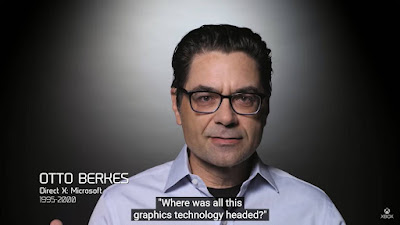

The documentary provides a much more detailed look at the process of creating the first Xbox than you would initially expect. The format has several of the key personnel involved in the creation of the Xbox recounting what happened from concept to production. The interview process feels natural and open, as if they are holding nothing back and can freely reveal the challenges that they encountered, both technologically and politically.


Archival footage is also used, from the stage events to apparently inside the Microsoft office. Although not sure how real the latter is, it at least appears real. For events where the interviewees are recounting that could not possibly have any real footage, the documentary uses comic book like, lightly animated, stills to depict the event. Interspersed with all this are clips from video games and events from competitors.


Perhaps the most engrossing aspect of the documentary is how much of an eye-opener it was for the people to convince Microsoft, a pure software company at the time, to enter the hardware scene with a games console, no less. It’s extremely interesting to see how events played out in just the right way for a group of “nobodies” to eventually pitch to Bill Gates and convince the upcoming CEO of the business case. It was high risk project that could have bombed and costed Microsoft a lot of money.


The documentary makes it clear that creating a games console from scratch, when you have no experience, and with established players in the market already, is no small feat. Everything from arranging the hardware, to designing the OS, to even just the name, has a lot of thought going into it. Each component has hundreds of issues to overcome, and it shines a light just how much of an achievement the teams at Microsoft had managed to accomplish. When they recount the situation during pitches or product displays, and anxiously awaiting the reactions and decisions of important people, knowing that their whole career hinges on it, it is a stressful (but ultimately rewarding) experience.
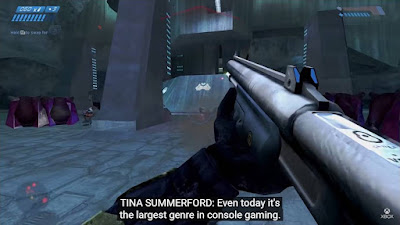

Just over half of the episodes focuses on the first Xbox, with the bulk on the period before its launch. Then it quickly goes over the killer release Halo and Xbox Live, both of which drastically changed the games industry. Then it finally moves over to Xbox 360, and the faster pace makes it feel like they are just glossing over it compared to the coverage of the first Xbox. Up until this point, the documentary was positive towards the brand and systems, naturally. However, surprisingly, it then moves onto the infamous Red Ring of Death, and owns up to its issues and how Microsoft scrambled to do damage control.


Then the documentary moves onto Xbox One, and the marketing problems that it had. However, what makes the Xbox One and Xbox 360 similar was the thought processes that went inside the heads of the people working on them, and how they worked hard to identifies the issues, and then solve the issues. Both times the Xbox team had managed to turn things around, albeit with a lot of time and effort. It is quite impressive on reflection at how Microsoft could have easily gone too far to go back, and forced to retire the Xbox brand.


The documentary only lightly touches upon the Xbox One X and the Xbox Series X. By this point, there were a lot more footage from marketing events and announcements rather than the animated stills, just because these things were more and more commonly recorded and shared. By the time the last episode rolls by and how relatively little time is spent on the later generations of Xbox, you can’t help but feel that maybe there should be more episodes so that there is time to go further in-depth.


Overall, Power On: The Story of Xbox is a surprisingly insightful and extremely interesting documentary on Xbox. While a lot of the focus, understandably, is on the first Xbox, going from its concept phase to design to release, the documentary doesn’t shy away from its successors and issues such as the Red Ring of Death and the Xbox One’s detrimental focus on TV. It’s main flaw though, and this is a testament to how good the documentary was, is that you will wish that it was longer so that it can go to the same level of depth into the Xbox 360 and Xbox One, as it did for the first Xbox. This documentary is a must watch for anyone who has an interest in gaming as a whole, since it is true that Xbox has, for better or worse, influence the gaming industry in many ways.

---------------------------------------------

For other TV reviews, have a look at this page.

Wednesday, July 6, 2022

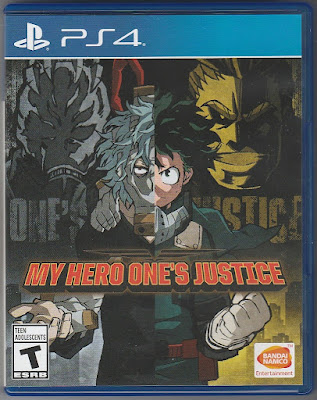
My Hero One’s Justice (PS4)


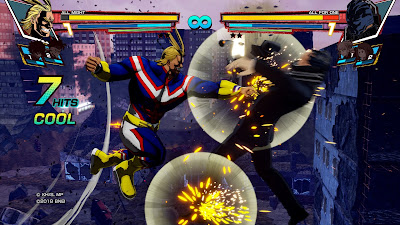
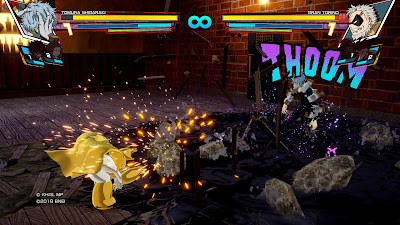
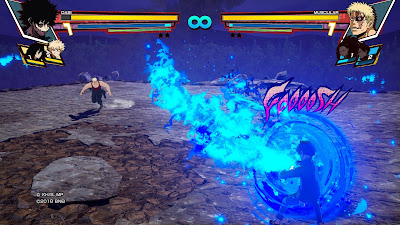
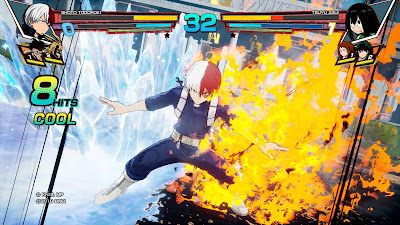
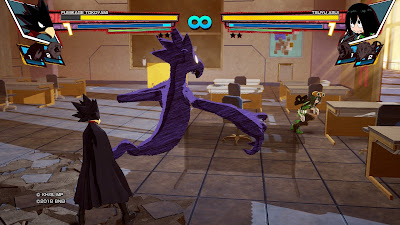
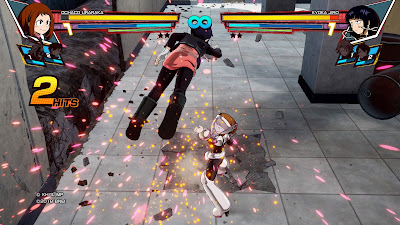
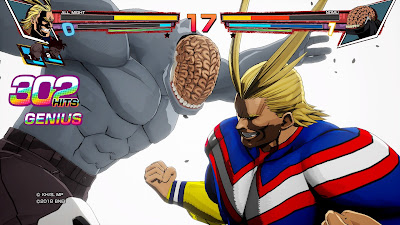
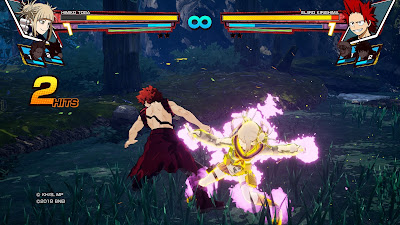
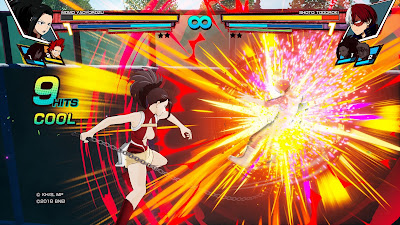
My Hero One’s Justice is a fighting game based upon the popular anime My Hero Academia (not sure why they butchered the title of this game so that it cuts out part of the anime’s title and does not make much sense in English either). Like many anime inspired games, it is a 3D brawler arena fighting game. The roster is fairly good, covering most of the main characters up to, and including, Season 3 of the anime. However, it’s still only twenty characters which means you’ll end up quickly running out of new characters to try.


There is a story mode that runs through the events of Seasons 2 and 3 of the anime. It’s a weird decision to pick those parts, as it starts during the middle of Season 2 (but will end up quickly covering the start of it as well), with only a 2 minute summary of the setting and background of the story. So if you have never seen the anime before, then it is confusing, and if you have watched the anime, it’s told too quickly to build the same level of hype and emotions that the anime did. It covers up until the middle of Season 3, with an unsatisfactory climax cutscene, especially compared to the anime. All in all, the story mode is there because the developers needed to put some single player content, and truth be told, it could have been a lot worse.


The story is told via static cutscenes that mimic comic book / manga panels, which suits the source material perfectly. It’s completely voiced, with Japanese voiceovers only, and uses the same voice actors as the anime. There will be some scenes where it uses the 3D models of the game but those are rare. This is the part where it is understandable why the developers started midway through the second season, since it’s where the fights start to occur more frequently, and so can pace the story better.


The story mode is structured in such a way that you select the mission, watch a short cutscene before, play the battle, and then watch a cutscene after. It’s simple but it works. As a fighting game, the controls make or break the game. As a casual player, it’s very easy to pick up the game. From its roster of twenty characters, each character has your basic attack, block and dash. What sets each one apart are their quirks, the in-universe terminology for each character’s superpowers.


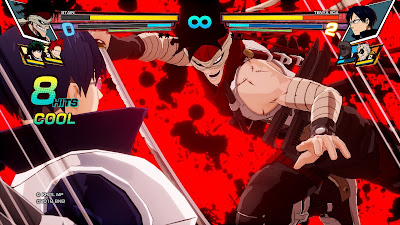
The cool thing with the game is that some thought was given in how to adapt each character’s quirks into their moveset. It does make everyone unique in their playstyle. We have Ida who’s built for speed, and then Kaminari who after using his ultimate move, will lose control for a while as he “fries his brains”, just like the anime. Each character has two quirk attacks mapped to two face buttons, with future Plus Ultra moves once certain gauges are full.


Furthermore, you can bring in sidekicks. There are gauges that charge and once it’s full, you can summon the sidekicks to attack before disappearing again. It’s a fun system even if you’re not proficient at it, although you have to get used to how the camera works. It doesn’t follow behind your character, rather it likes to follow behind your opponent instead, so it can feel weird. Once you complete a match, you get graded based on the variety of your moves, and other techniques that you’ve used.


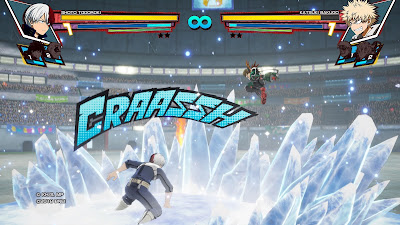
You will need to be familiar with the characters that you end up using. Each character has a different attacking range and so can be really annoying when you fire off an ultimate attack, only for it to miss, or even worse, be cut short when the opponent hits you. Characters’ attack start up animations also vary quite a bit, you might be surprised when using a new character how slow they may attack and so get counterattacked relentlessly by your opponent. The AI also tends to like to constantly run around the arena, which is really annoying when most characters’ attack ranges are short. If you end up dashing towards them recklessly, you’ll get combo’d. It’s little things like these that makes the game rough.


The graphics are decent, it matches it’s source material fairly well. The stages are inspired by the events in the story mode, so you’ll get to fight in Gran Torino’s room, or in the alleyway against Stain, or at U.A.. Yes, the environments can look simple and drab, but this is obviously a lower budget game so you’ll have to end up giving it some slack.


The story mode isn’t too long, there are actually two sides of the story, the Hero Side and the Villain Side. As you can guess, it tells the same events, but from the different viewpoints of the heroes and villains. While it closely follows the anime, there are some minor points where it explores a little bit more, but it’s so minor that it’s not really worth playing through the whole thing just to see if you weren’t interested. Each side takes around two to three hours, so all told, it’s four to six hours of story content, which isn’t too bad, although you have to consider it is repetitive stuff (cutscenes and single battles).


There are a few other modes to try out once you’ve finished the story. The Arcade mode pits you against six CPU opponents. Completing it unlocks more cosmetics items to dress up the characters. Cosmetics are a big thing with the game, as they are the primary form of rewards. The Training mode allows you to practice moves against a CPU opponent. Local allows you to fight either CPU opponents or another player locally using a second controller. Online is self-explanatory, as you battle against others on the internet. You also earn coins for everything you do in the game which is used to unlock more items.


The Mission mode is the other meaty single player mode. It presents you a “map”, filled with “missions”. These are just fanciers terms for a chain of battles in order to progress to the end. You gain points in each mission and get a final grade at the end. It also includes some minor RPG elements, such as experience points and increasing the levels of the characters. This is where the downside is, as there are only six maps, but they rapidly scale up in level requirements that it is practically compulsory to grind levels so that you don’t die in one combo on the higher difficulties. Each mission may also have a different win condition like no guarding or the opponent have increased defence. You can use items to remove some of these barriers but it does feel too grindy in the end.


Overall, My Hero One’s Justice is a passable first attempt at a fighting game based upon the popular manga and anime series. You have to be a fan to fully appreciate the game, but you’ll still have some fun if you aren’t. Being a fighting game, it can get repetitive if you only play the single player stuff, such as the Story and Mission modes, however, the game does provide quite a bit of content, more than you would expect. The game mechanics are easy enough to pick up but will seem clunkier than expected at first, so you will require some time to get used to it. It’s far from being an amazing game but you will still have some enjoyment out of playing it.

-----------------------------------------------------------

For other game reviews, have a look at this page.
(As an Amazon Associate I earn from qualifying purchases)

Sunday, July 3, 2022

Toy Review: Transformers Generations Legacy Dragstrip (Deluxe)


Review: 
#724
Name:  Dragstrip
Brand:  Transformers
Allegiance:  Decepticon
Line:  Generations - Legacy
Year of Release:  2022
Size Class:  Deluxe (Wave 1)
Mold Status:  new

VEHICLE MODE:


Heavily based upon his G1 incarnation, much more so than the Combiner Wars version, Dragstrip transforms into a six-wheeled race car.


It's a very rectangular vehicle mode, but this is done really well, there's really no flaws here.


In terms of size, he is actually pretty decent, approximately the same size as TLK Bumblebee.


The pair of robot guns can peg on each side.


One thing that's interesting is that there is an exposed cockpit with the seat.  The seat is actually the head, so this somewhat justifies the hollow head (even though it feels weird in robot mode).


All six wheels roll, but the car overall is close to the ground, which is what you'd expect of a race car.


This is a decent vehicle mode, it looks great.

TRANSFORMATION:

You would expect a simple transformation but Dragstrip has some interesting elements, while still remaining accessible.  The front splits into two to form the shoulders and arms, and there are pylons that help give him the shoulder width in robot mode.  While the cockpit lifts up and rotates to form the robot torso.  Finally, the back splits into two and extends to form the legs, with the spoiler halves flipping down to form the feet.

ROBOT MODE:


Dragstrip's robot mode is much more accurate to his G1 self than any Generations-esque toy released before this.


He has no kibble, which is pretty impressive, although the trade-off for this feat is that the robot mode is quite rectangular as well.


The head sculpt is good, as mentioned before, the back of the head is hollow.


He's approximately the height of a normal Deluxe, so he's pretty well sized all in all.


You might think that there is too much yellow, but it isn't too bad in hand.


He has plenty of articulation, with joints for his head, shoulders, elbows, waist, hips, knees and ankles.


He comes with a pair of guns.


Of course he can hold a gun in each hand.


Thanks to the ankle joints, he poses really easily.  There are some neat design elements too like the second wheel on each shoulder folder back to free up some articulation while still keeping the spirit of the original design.


The guns can also peg together to form a double-barrelled blaster.


If you don't want to use the guns, they can store at the back of his legs.


A fantastic robot mode, and much better than stock photos would lead you to believe.

OVERALL:

Dragfoot is a fantastic figure.  It's one of those that's just a solid allrounder.  He may seem boring and bland at first glance, but he contains enough quirks to keep it interesting.  Plus, he's a component of Legacy Menasor so you'll have to get him anyway if you want to form the combiner.

----------------------------------------

For other Transformers reviews, have a look at this page and this page.

(As an Amazon Associate I earn from qualifying purchases)

Friday, July 1, 2022

Kiznaiver (2016)


Kiznaiver is a twelve episode anime, that started off as an anime and did spawn a manga adaptation. It follows a group of seven high school students, although the lead is Agata. Agata feels no emotions or pain, but he was chosen along with the other six and became Kiznaivers. Basically, all seven of them now share a bond, and the most tangible aspect of that bond is that if any one of them feel pain, the others feel it as well. In effect, they share pain.


Each of the seven has vastly different backgrounds and personalities. In a normal situation, they would never have grouped together or become friends. At best, they would have just tolerated or acknowledged each other. However, now they are inexplicably linked, whether they like it or not, and have to understand each other as they now work as a team. The anime has slow pacing though, as it doesn’t reveal what their objective is for a while after the group forms.


By the time the halfway point arrives, you might still find yourself in the dark on just what the whole thing is about. By this point, we learn more about the interactivity of the pain shared between the group, but for what purpose? They are placed into unusual “tests” that they have to pass, so that data can be collected. There is apparently an experiment city that somehow has a role in all this. Although it’s hard to see the common threads between them.


This anime is produced by Trigger, well known for their other works such as Kill la Kill and SSSS.Gridman (although the latter was a released after this). Therefore as expected, the anime has a distinct aesthetics and the animation feels slick and fluid. It’s normally bright and colorful and brings with it, its own certain charms. Although also being a Trigger anime, there are some odd things and random reactions that happen over the course of the season.


The more interesting aspect comes later in the season, where we start to see the characters’ emotions being toyed with. As more and more information comes to light, you can’t help but feel sympathetic at the characters’ plight, and disgust at the people that put them there. They are put into situations that causes them a lot of pain, ruthlessly dragging out memories and emotions that they wanted to forget or hide. It does feel like the characters have to experience their darkest hour before we can get the typical idealistic ending that we’d expect.


One thing for sure is that the relationships between the characters within the group is a mess. Due to this, they are taken advantaged of. Stemming from this is the backstory of Agata and his lack of emotions or pain. Since it’s revealed late into the story, it feels consistent with the events that happened in the earlier episodes, and so you feel like it does a lot to explain what is currently going on.


The high is not sustainable though as the anime needs to wrap up, and it does so in a quick and messy way. To be fair, considering the subject matter and how it approached it, it was going to have a tough time executing the conclusion anyway. As a result, certain bits of the ending can feel extreme, while other bits feel lacking. It wraps up all the lingering plot points, albeit in a clumsy and inelegant way at times.


Overall, Kiznaiver is average. It’s not amazing but it’s not horrible either, just very average. The anime has the aesthetics and animation going for it, but the storytelling can be much stronger. Currently, it can be too slow paced in the beginning, but then loses focus and becomes messier towards the end when the more interesting aspects start to show.

------------------------------------------------

For other anime reviews, have a look at this page.
Blogger Widget